
Last updated September 23, 2026
Whole-system duct and dryer vent check with before-and-after photos - you see exactly what came out of your vents
That "$99 whole-house special" is a bait ad - the real number appears once they are in your hallway, or the "clean" is a shop-vac at the register. We photograph the inside of your ducts before and after instead.
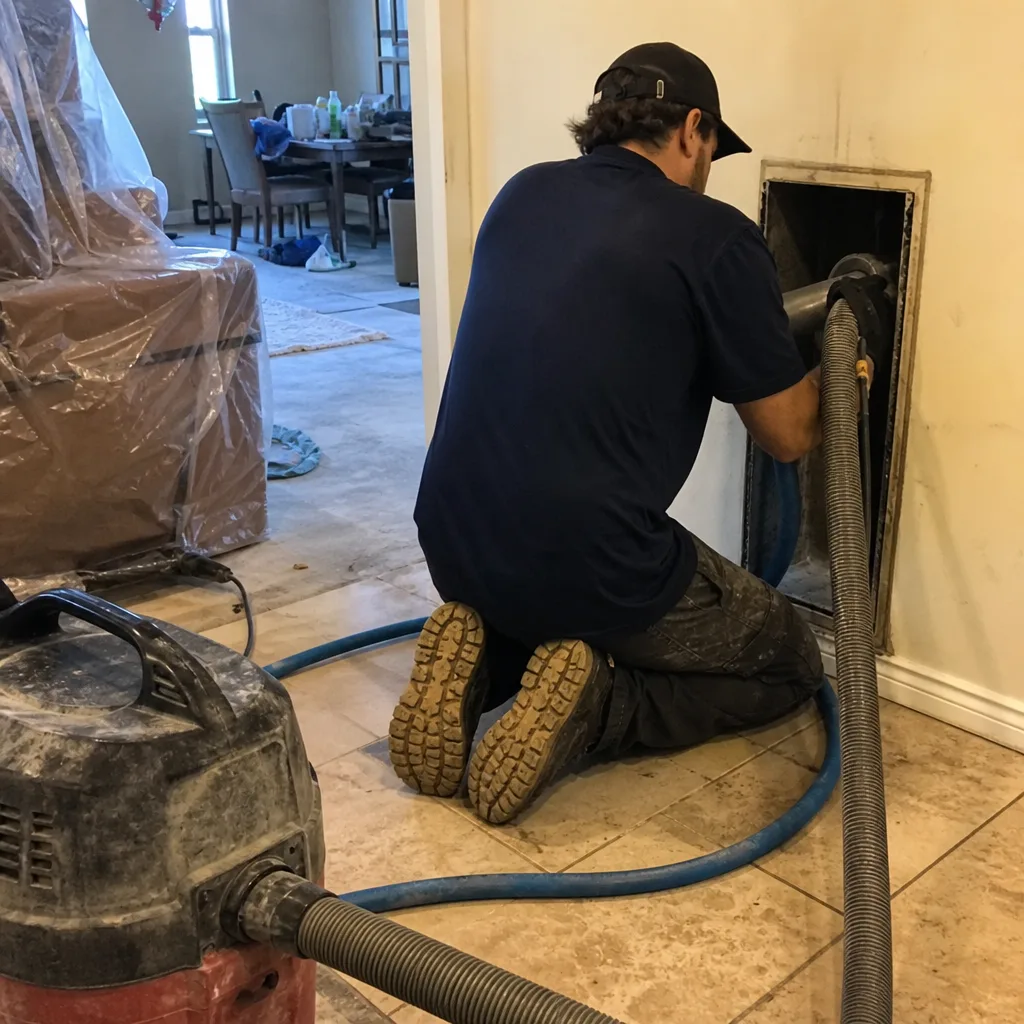 Before
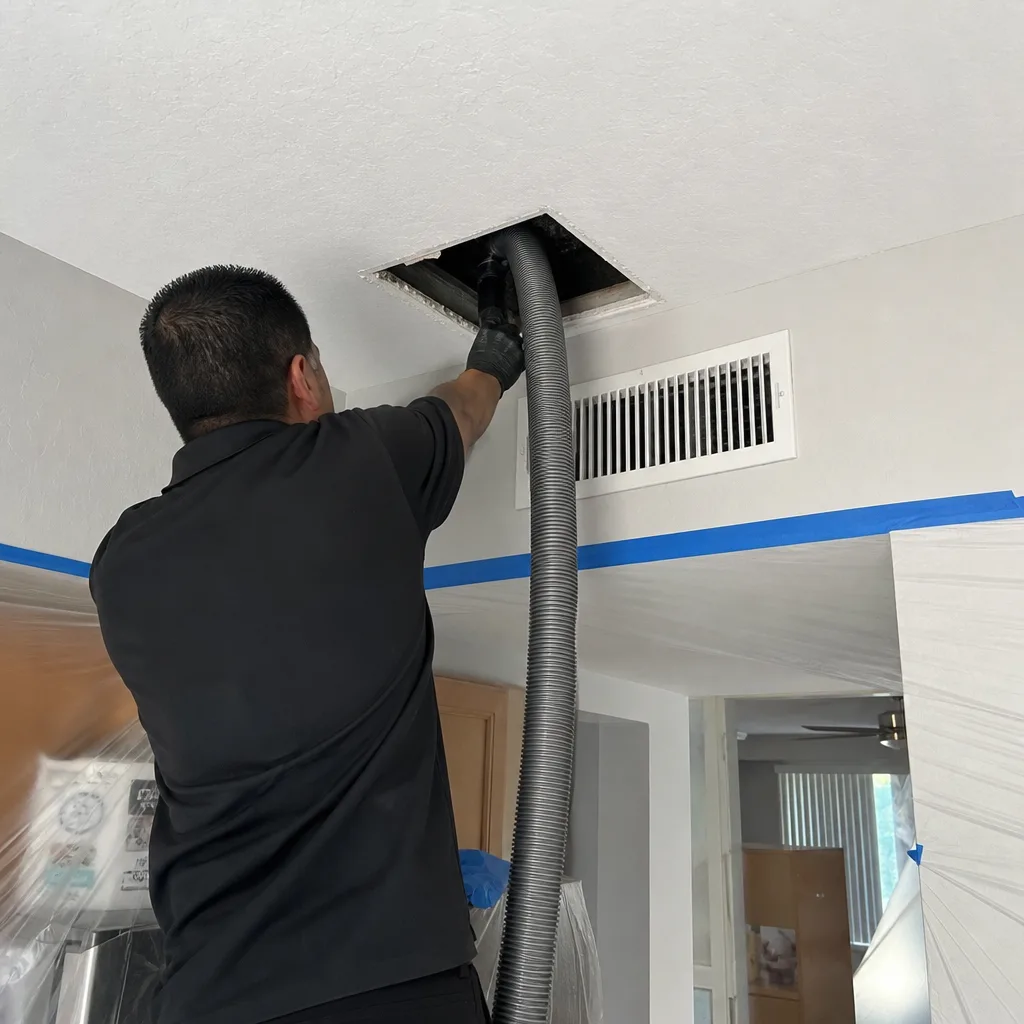 After
After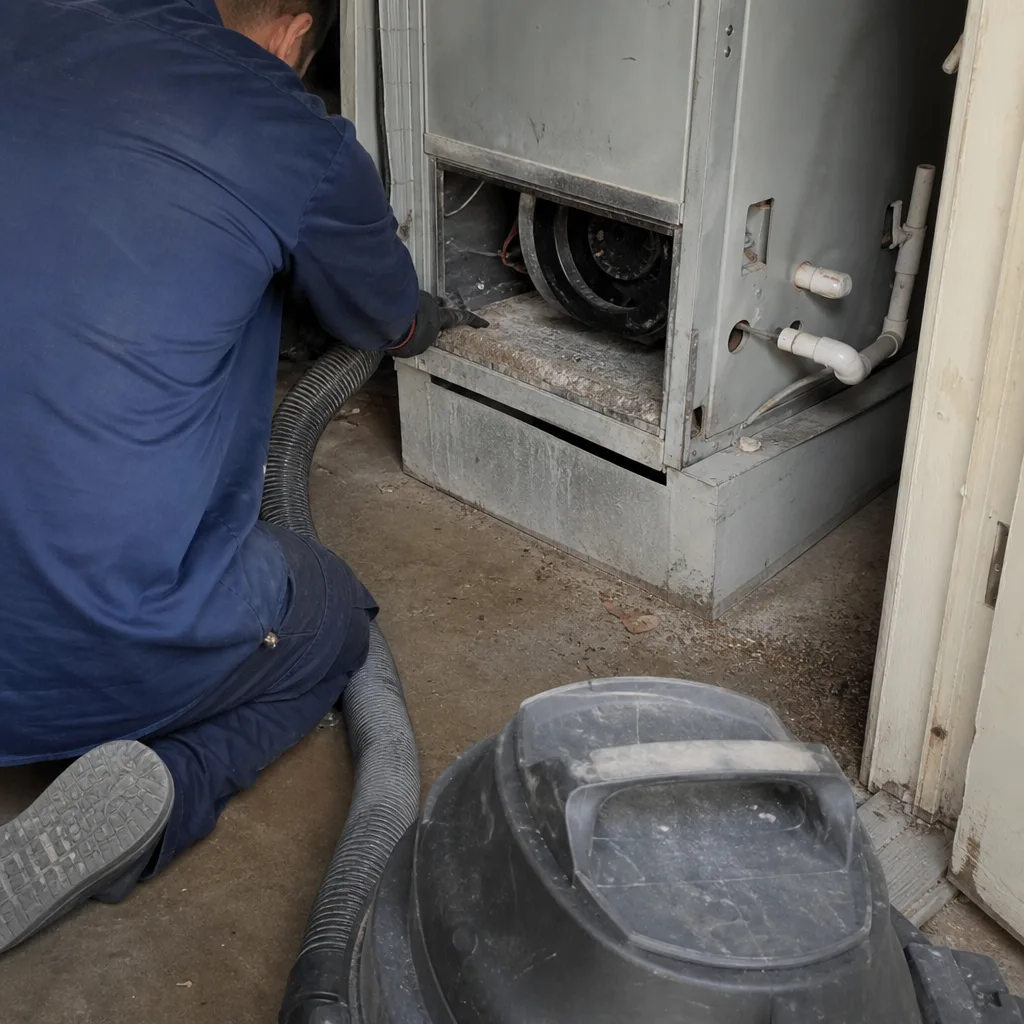 Before
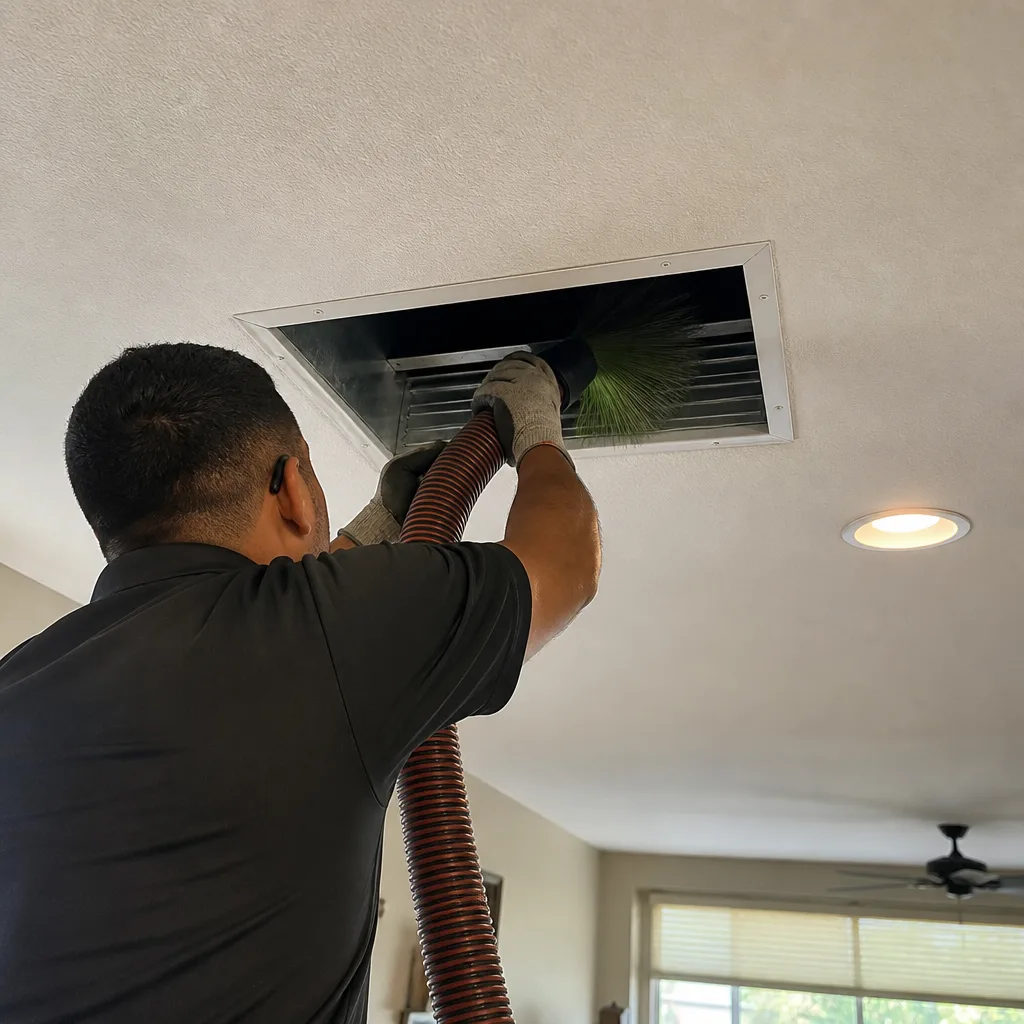 After
After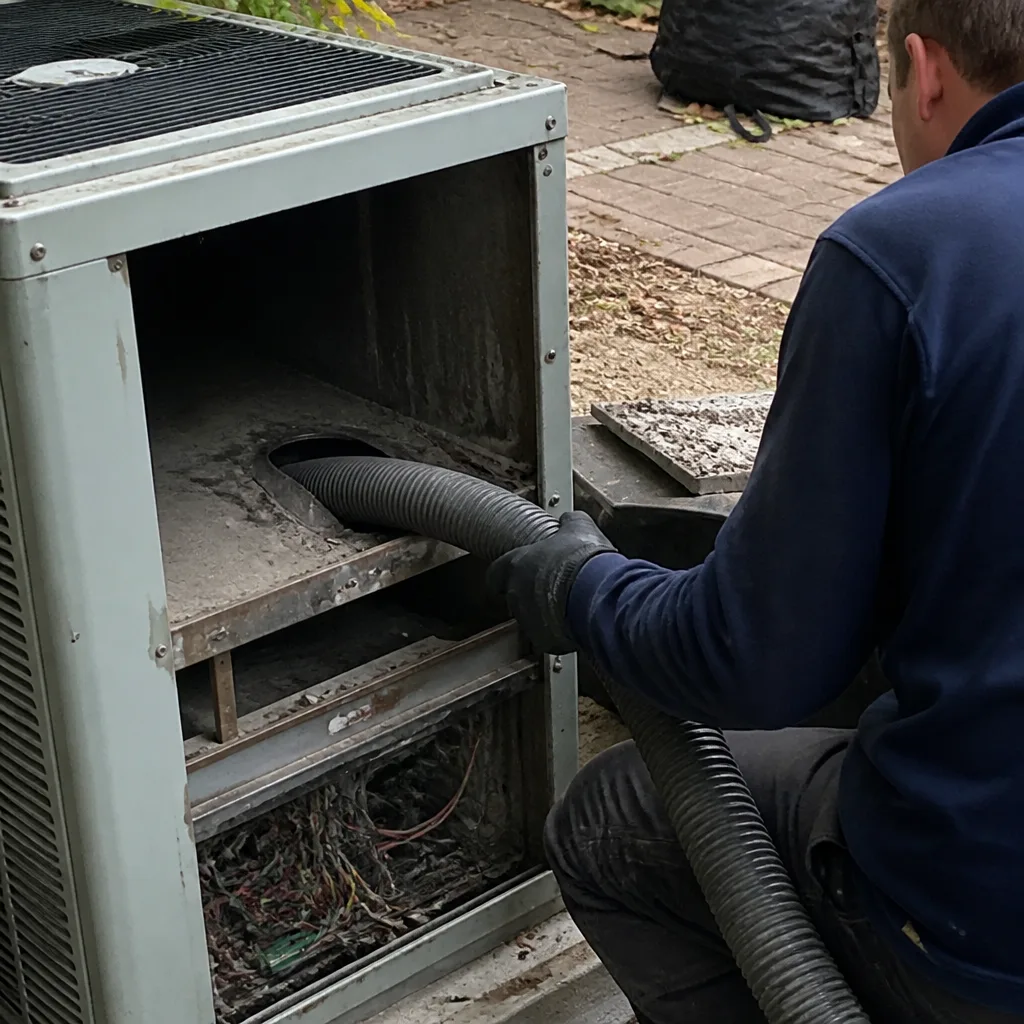 Before
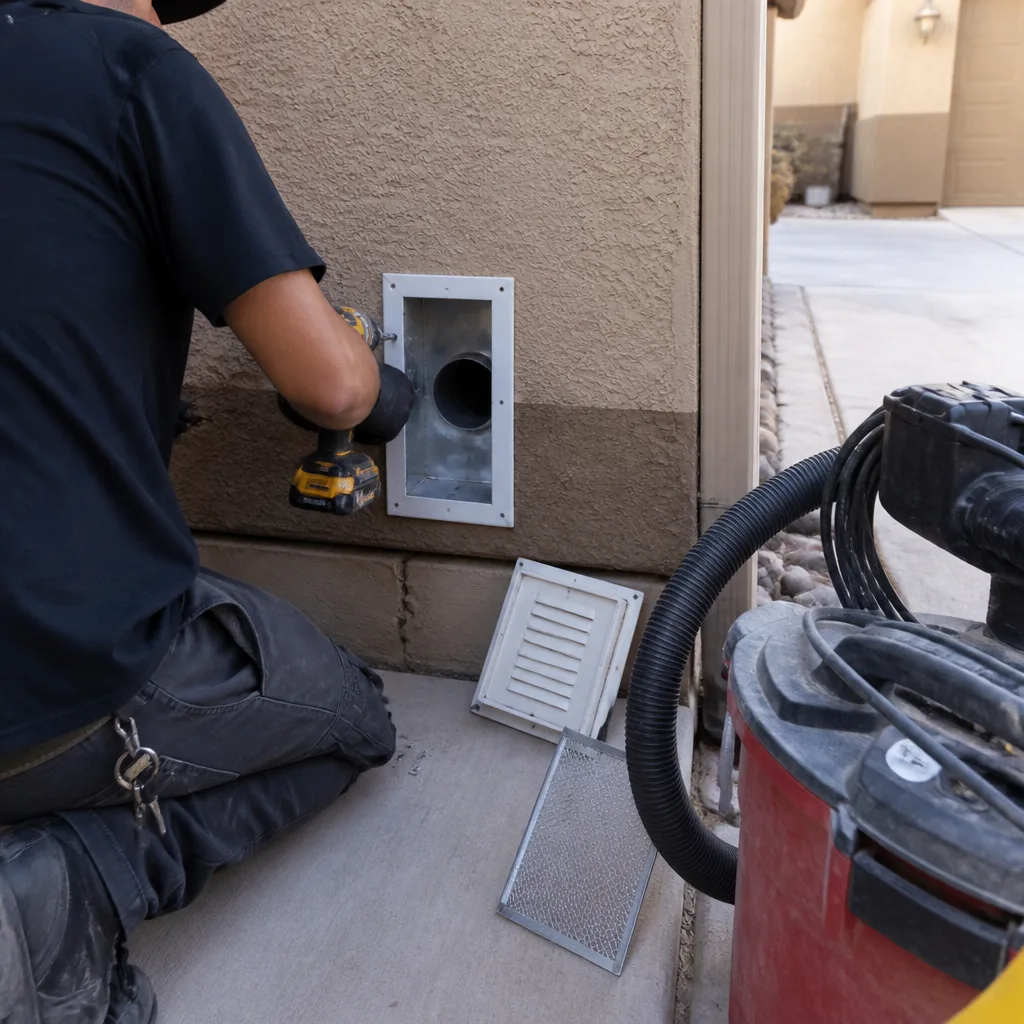 After
AfterThe Complete Guide to Air Duct Cleaning in Chandler
Chandler homeowners who’ve owned their home since 2015 or later have likely received the $79 coupon in the mail - a shop-vac, a single register, and a handshake. In our experience, that’s not air duct cleaning. It’s theater, and it leaves the debris that matters exactly where it was. What follows is a documented framework for knowing when cleaning is necessary, what legitimate work looks like from arrival to departure, and what you should hold in your hands when the crew leaves - a written price, a photo record, and a 365-day guarantee. This guide is built around what the camera inside your ducts actually shows, not marketing language about “cleaner air,” and pairs well with our DIY vs Professional Air Duct Cleaning: The Chandler Homeowner’s Decision Guide.
Quick Answer
Air Duct Cleaning services in Chandler typically cost $400-$900 for a complete residential system and should include rotary brush agitation through every supply and return run, negative-pressure extraction at the source, and a documented before-and-after photo record of each duct. In Chandler’s desert environment, with caliche dust and seasonal dust storms, most homes benefit from cleaning every 3-5 years - sooner if you’ve completed renovation, noticed reduced airflow at registers, or observed debris blowing from vents when the HVAC cycles on.
Table of Contents
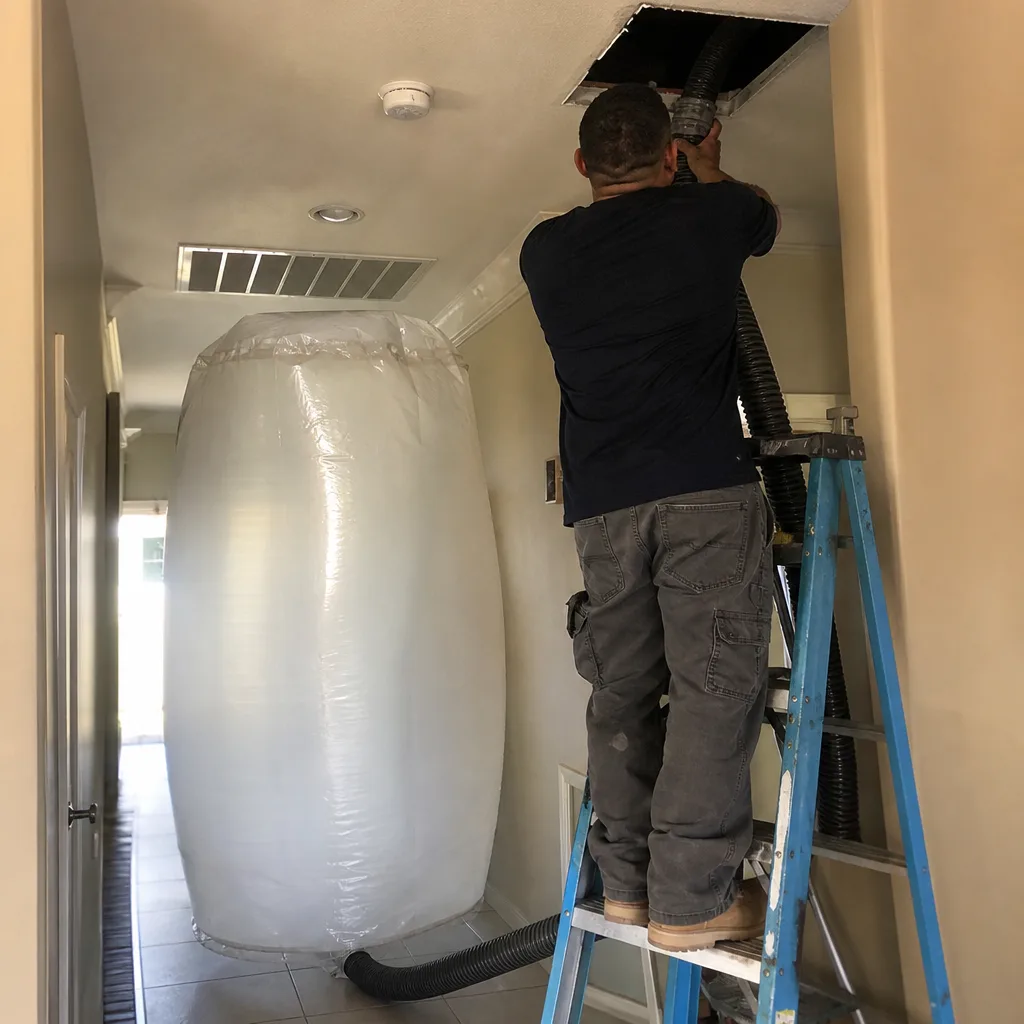
- What Legitimate Duct Cleaning Actually Looks Like
- Why Chandler’s Desert Dust Changes Everything
- The Equipment That Must Be Present on Every Job
- What a Written Scope of Work Should Itemize
- How to Read a Before-and-After Photo
- What Air Duct Cleaning Costs in Chandler
- What the 365-Day Done Right Promise Actually Covers
- How Often Chandler Homes Really Need Duct Cleaning
 Before
 After
AfterWhat Legitimate Duct Cleaning Actually Looks Like
A legitimate duct cleaning job has a specific shape. It starts before the truck arrives and ends with documentation you can file away. Here’s the sequence we’ve followed on every one of the 52,000+ homes we’ve served since 2013.
- Written price delivered before work begins. Haven Standard Clause 1 requires this. The technician walks the system, counts supply and return runs, inspects the plenum (the main distribution box connected to your HVAC unit), and produces a written price. No exceptions. If a company won’t put a number in writing before touching equipment, that’s data worth noting.
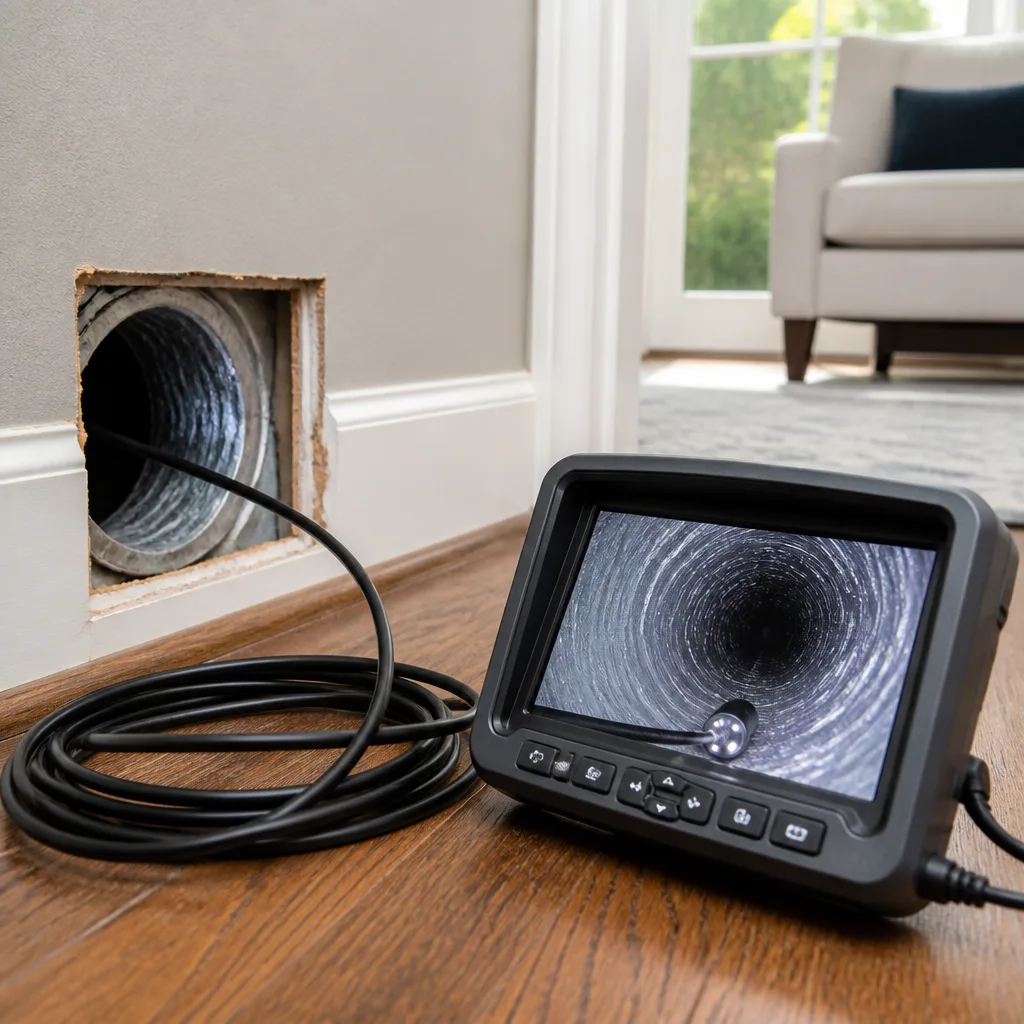
- Access panels opened, camera inserted. Every duct run - the individual pathways from plenum to register - is photographed before agitation begins. This isn’t for marketing. It’s for verification. The customer sees what the camera saw.
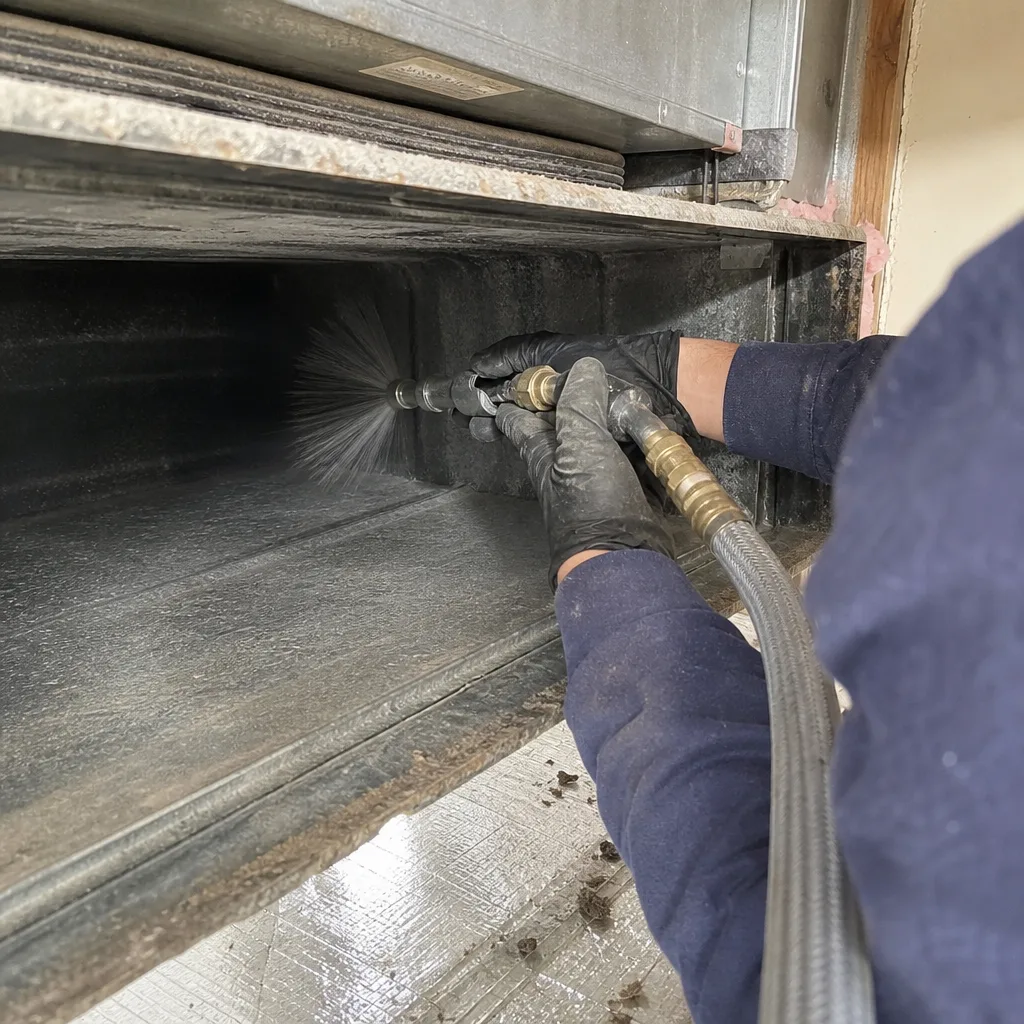
- Rotary brush agitation through the full length of each run. A spinning brush on a flexible cable dislodges debris adhered to duct walls. This is mechanical work, not vacuum suction at a single point.
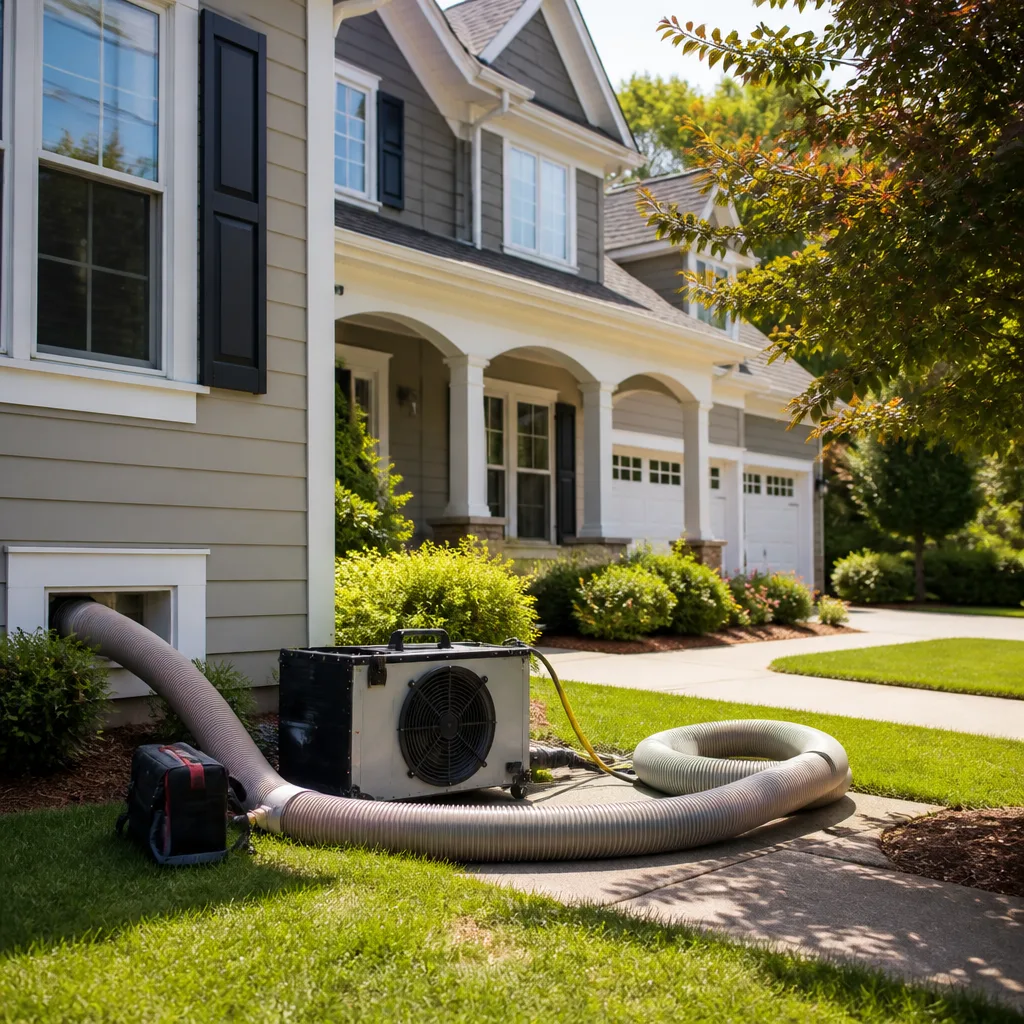
- Negative-pressure extraction at the source. A high-volume vacuum, typically mounted at the plenum or main trunk line, creates suction that pulls dislodged debris out of the system entirely - not just redistributed.
- Post-cleaning photography of every run. The same camera, the same access points, the same angles. The photo record is delivered as part of the standard job record.
- Written scope signed, 365-Day Done Right Promise documented. The customer holds a complete record: what was done, what it cost, what the guarantee covers, and how to trigger it.
What this excludes: a shop-vac at one register, a compressed-air wand with no extraction source, or any job where the technician cannot show you the inside of your own ducts before and after. We’ve responded to hundreds of Chandler homes where a previous “cleaning” left debris build-up intact at the first elbow - the bend in the duct run where dust compacts and airflow drops.
The Air Duct Cleaning in Chandler page details our specific process for local homes.
Why Chandler’s Desert Dust Changes Everything
Chandler sits on the Sonoran Desert floor, and the soil composition here is not what you’ll find in national averages. Caliche - a hardened layer of calcium carbonate that forms in desert soils - breaks down into fine particulate that behaves differently than organic dust. It’s abrasive, it carries more mineral content, and it compacts differently inside ductwork.
What this means practically:
- Debris is denser and more adherent. Caliche-laden dust doesn’t shake loose with passive airflow. It requires mechanical agitation - the rotary brush - to break surface adhesion.
- Seasonal dust storms (haboobs) load systems rapidly. A single significant event can introduce material that would take two years to accumulate in a humid climate. Homes in Ocotillo, Fulton Ranch, and the Andersen Springs area - closer to open desert and agricultural land - see this more acutely than central Chandler properties.
- Filter loading happens faster. Standard 1-inch pleated filters in Chandler homes often reach capacity in 60-90 days during spring dust season, compared to 90-120 days in moderate climates. When filters load beyond design, bypass debris enters the duct system directly.
- Evaporator coil contamination accelerates. The indoor coil (the heat exchange surface above your furnace) catches what filters miss. In Chandler, we’ve photographed coils with caliche buildup thick enough to measure in millimeters - a direct result of dust composition, not just volume.
This is why national “every 7-10 years” guidance doesn’t apply cleanly here. Chandler’s environment is specific, and cleaning frequency should reflect it. The HVAC Cleaning in Chandler page covers evaporator coil and blower maintenance, which often accompanies duct cleaning in local homes.
Homes near the Price Corridor or Chandler Municipal Airport flight paths see additional particulate load from jet traffic and associated infrastructure activity - a localized factor rarely noted in generic duct cleaning guidance.
The Equipment That Must Be Present on Every Job
You don’t need to be a technician to verify what’s on the truck. Ask. Look. The three core systems that separate legitimate work from vacuum theater:
1. Negative-Pressure Source
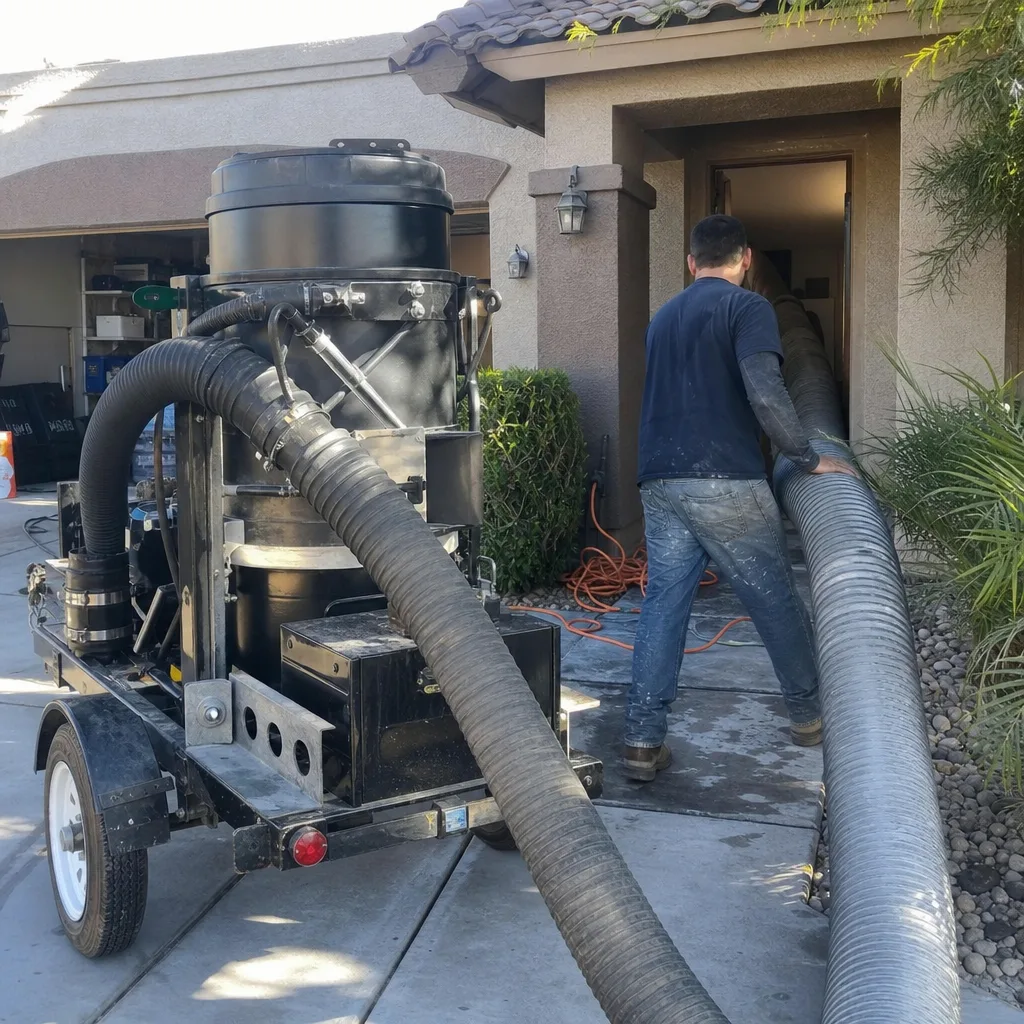
A vacuum unit capable of sustained high volume at the plenum or main trunk line. This is not a shop-vac. Units from Nikro or Abatement Technologies pull 5,000+ CFM (cubic feet per minute) and create negative pressure throughout the system, so dislodged debris exits rather than resettling. The vacuum connects to the ductwork, not just waved at a register.
2. Rotary Agitation System
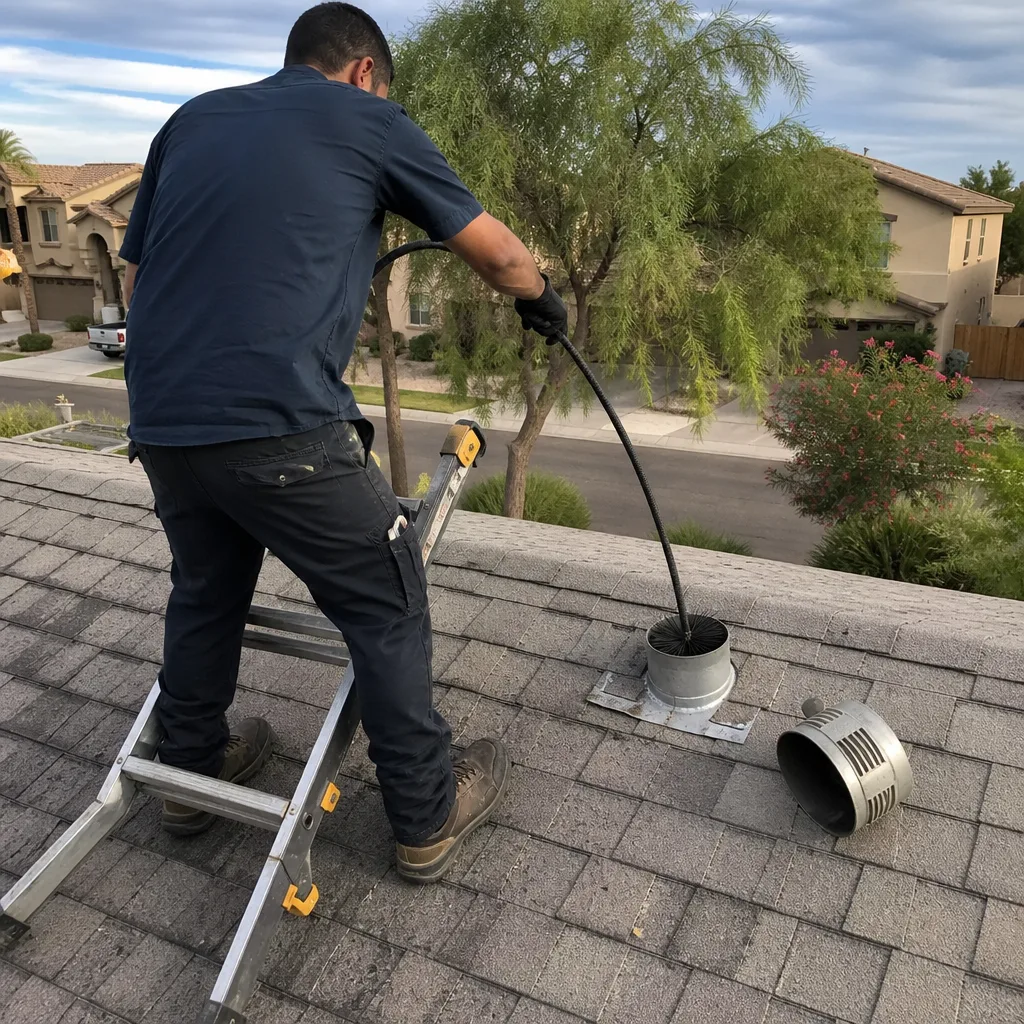
A motorized brush on a flexible cable, sized to the duct diameter, that travels the full length of each run. Rotobrush systems are common in residential work; the brush spins at controlled speed to dislodge debris without damaging flex duct or duct board. Without mechanical agitation, you’re removing only loose surface material - the adhered layer remains.
3. Inspection Camera
A borescope or dedicated duct camera with recording capability. This is how the before-and-after record is created. If a technician cannot show you the inside of your duct in real time, they cannot document their work. The camera doesn’t lie, and it doesn’t depend on technician memory.
Additional equipment we specify under the H.A.V.E.N. Standard:
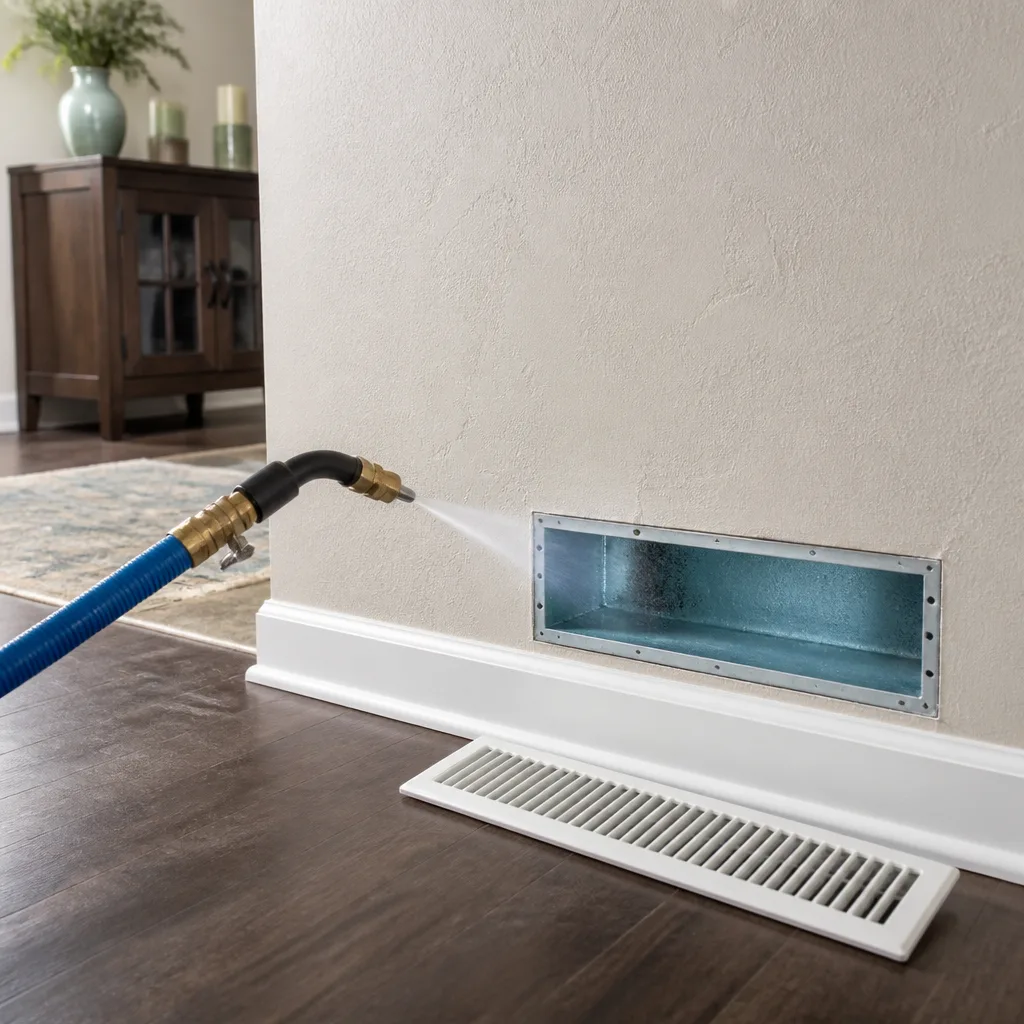
- Register and boot cleaning tools: The boot is the sheet-metal transition from duct to register. Debris accumulates here and must be addressed separately from the duct run itself.
- Plenum access tools: The plenum requires inspection and often cleaning - it’s the junction point where all runs converge and where the heaviest loading occurs.
- Sanitizing equipment (when requested): EPA-registered products applied as mist or fog, not broadcast chemicals. We use Guardsman and Honeywell systems for this application when microbial concern is documented.
Equipment from Aprilaire - specifically their air cleaner and filtration line - integrates with duct systems we service, though we note manufacturer specifications rather than invent performance claims.
What a Written Scope of Work Should Itemize
Haven Standard Clause 1 exists because ambiguity benefits the seller, not the buyer. Before any panel comes off, the written scope should specify:
| Item | What It Means | Why It Matters |
|---|---|---|
| Number of supply runs | Individual ducts carrying conditioned air to rooms | Each requires separate agitation and extraction |
| Number of return runs | Ducts pulling air back to the HVAC unit | Often larger diameter, heavier debris load |
| Plenum inspection/cleaning | Main distribution box at unit | Critical junction; often skipped in cut-rate jobs |
| Register and boot cleaning | Visible grille and transition piece | Cosmetic and functional; debris blows from here |
| Filter replacement (if included) | New filter installed post-cleaning | Prevents immediate recontamination |
| Photo record delivery | Before/after images of each run | Verifiable documentation of work completed |
| Total price | Single flat price for complete scope | No per-vent add-ons, no trip charges, no surprises |
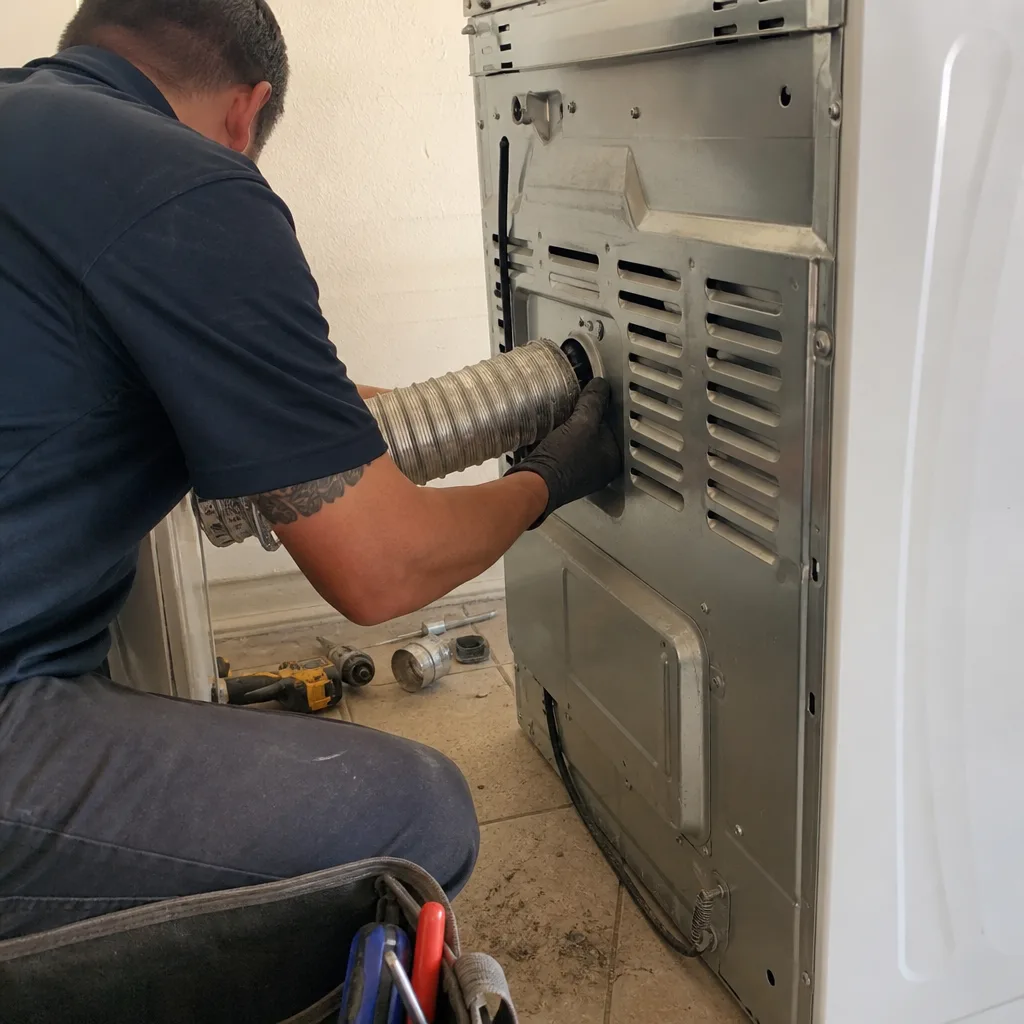
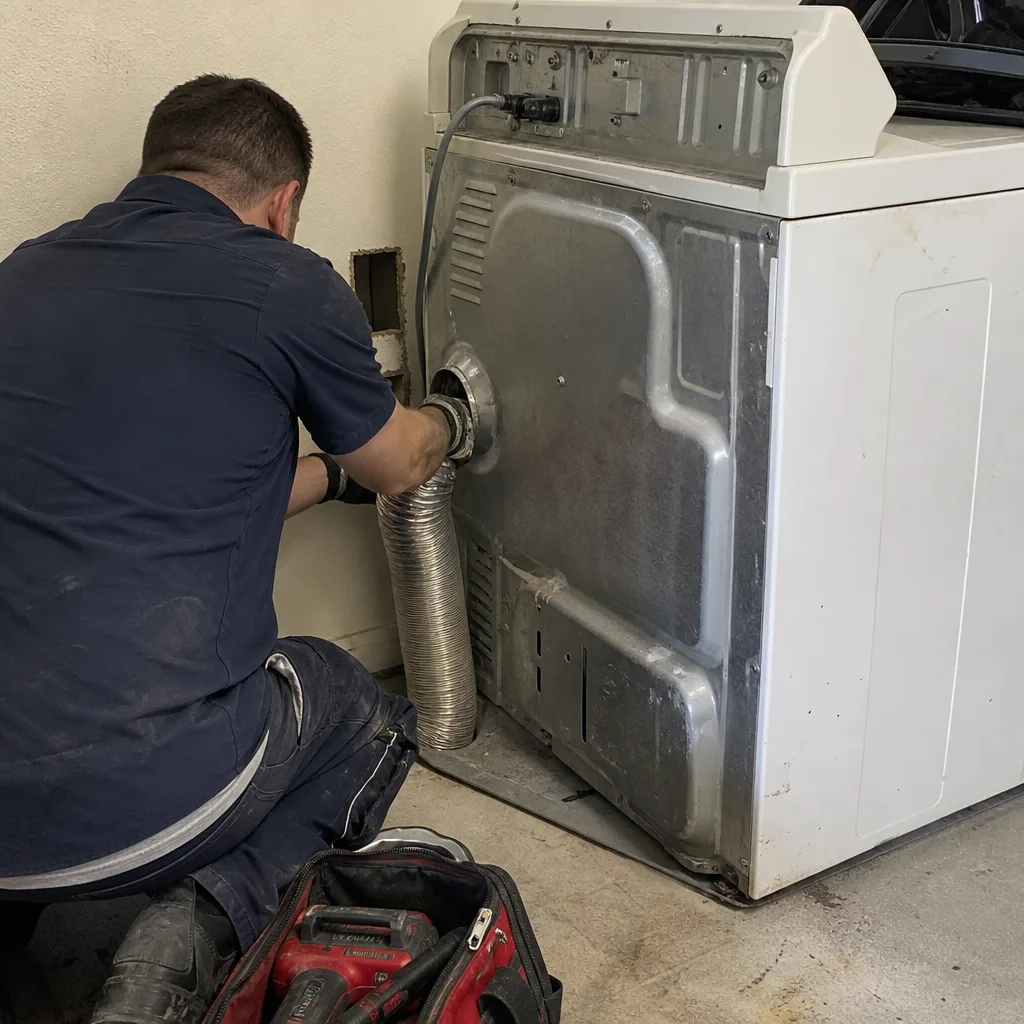
The scope should also note any exclusions: duct repair needs discovered during inspection, accessibility limitations (attic ducts in summer heat, for example), or recommendations for additional services like Dryer Vent Cleaning in Chandler, which we often bundle when the laundry room shares a wall with the main return.
In Chandler’s 2015-2025 housing stock - much of it in master-planned communities like Layton Lakes, Cooper Commons, and Toll Brothers at Avian Meadows - duct systems vary significantly. Some builders used flex duct extensively; others used sheet metal with internal insulation. The written scope should identify what your home has, because the cleaning approach differs.
How to Read a Before-and-After Photo
The photo record is your only independent verification that work occurred inside the ducts. Here’s what to look for:
- Consistent camera angle and depth. The before and after should show the same duct section, same distance from access point. If the “after” is shot closer to the register where ducts are naturally cleaner, that’s not evidence.
- Visible duct features for orientation. Look for seams, support straps, or construction marks that appear in both images. This confirms the same location was photographed.
- Surface texture change, not just color. Legitimate agitation removes the matte, fuzzy layer of adhered debris and reveals the smoother duct wall beneath. A photo that shows only slightly lighter color may indicate vacuum-only work.
- Debris at elbows and junctions. These are the hardest points to clean. If elbows show no change, the brush likely didn’t navigate the full run.
- Timestamp or sequence data. Our photo records include job metadata. Ask for it.
We’ve shown Chandler homeowners images where the “after” photo from a previous company was actually the before photo from our camera - the debris pattern matched exactly, and the customer recognized a construction mark they’d noticed during our walkthrough. The photo record protects both parties.
What Air Duct Cleaning Costs in Chandler
National pricing databases show wide ranges because they aggregate markets with different labor costs, equipment standards, and scope definitions. Here’s what we’ve observed in the Chandler market specifically, based on jobs we’ve completed since 2013:
| Home Size / System Complexity | Typical Range | What’s Included |
|---|---|---|
| Small home (under 1,500 sq ft), 1 system, up to 10 runs | $400-$550 | Full rotary agitation, negative-pressure extraction, photo record |
| Mid-size home (1,500-2,500 sq ft), 1 system, 11-18 runs | $550-$750 | As above, plus plenum cleaning |
| Large home (2,500-4,000 sq ft), 1-2 systems, 19-30 runs | $750-$900 | Full scope, multiple zones, extended access |
| Very large or custom (4,000+ sq ft), 2+ systems | $900-$1,400 | Project-specific scope, extended duration |
What affects price legitimately:
- Accessibility. Ducts in conditioned crawl spaces or behind finished basement ceilings require more time. Chandler’s slab-on-construction homes rarely have basements, but attic ductwork in summer (140°F ambient) extends labor time.
- Duct material. Flex duct requires slower brush speeds and more careful handling than rigid sheet metal.
- Contamination level. Heavy caliche compaction or post-construction debris extends agitation time.
What should never affect price after the written scope: “we found more than expected,” “this vent needs extra attention,” or any per-vent surcharge. Haven Standard Clause 1 means the price is flat per system, agreed before work starts.
The $79-$149 coupon jobs we’ve encountered in Chandler typically cover 3-5 registers with a vacuum hose and no agitation. The arithmetic doesn’t work for legitimate equipment and labor at that price. Call (520) 464-6297 for a written estimate - ours or a competitor’s, we provide free second opinions on any written quote.
What the 365-Day Done Right Promise Actually Covers
Most “satisfaction guarantees” in this industry are verbal policies, subject to manager discretion and forgotten six months later. The 365-Day Done Right Promise is a written guarantee, delivered with the job record, with specific trigger conditions.
What it covers:
- Workmanship defects. If debris remains in a run that was scoped for cleaning, we return and complete the work. The photo record establishes the baseline.
- Damage caused during cleaning. Rare, but documented. If a duct run is damaged during agitation, we repair or replace at our cost.
- System performance issues attributable to our work. If airflow worsens after cleaning and inspection shows our process caused blockage or disconnection, we correct it.
What it does not cover:
- New contamination after cleaning. A home with ongoing construction, filter neglect, or pet hair loading will recontribute ducts. The guarantee covers the work performed, not future events.
- Pre-existing system issues. Ducts with collapsed flex, disconnected runs, or design flaws noted in the pre-work inspection are documented as exclusions.
The trigger is simple: call with your job number, describe the concern, and we schedule inspection. No “manager approval” gate. The promise is backed in writing on every job, not stated in marketing copy and buried in fine print.
Haven Standard Clause 3 - Verified Crews - supports this: background-checked, uniformed technicians, identified by name before arrival. Accountability requires knowing who was in your home.
How Often Chandler Homes Really Need Duct Cleaning
Generic guidance says “every 3 to 5 years.” In Chandler, the desert environment, housing stock, and lifestyle factors shift that range. Here’s our observed pattern across 52,000+ homes:
Clean sooner than 3 years if:
- You’ve completed renovation, especially drywall work or flooring replacement. Construction dust is fine, abrasive, and penetrates filters.
- You have pets with significant shedding. Pet hair binds with caliche dust and compacts at elbows.
- Someone in the home has documented respiratory sensitivity and medical guidance recommends environmental control.
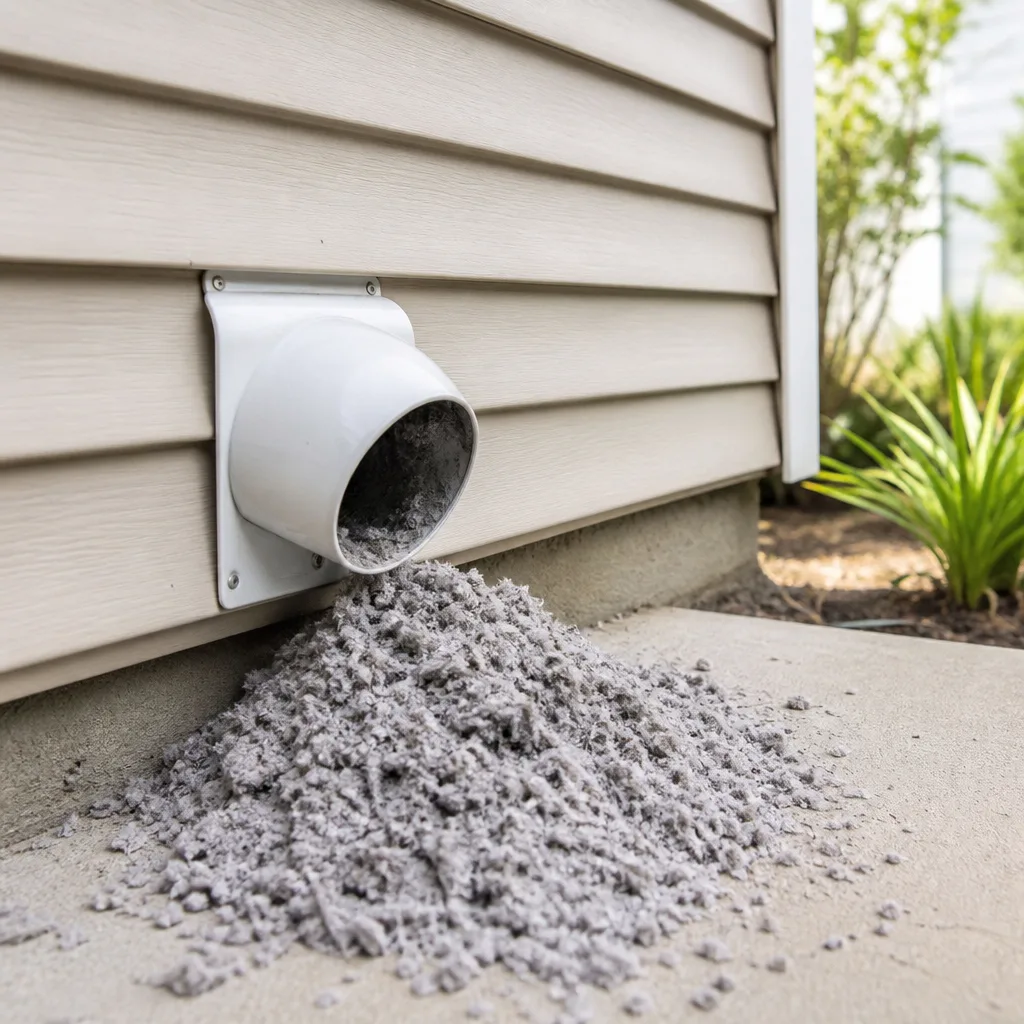
- You’ve observed visible debris blowing from registers when the HVAC cycles on.
- Your home is in a high-exposure area: near agricultural fields, construction zones, or the open desert edge (common in southern and western Chandler developments).
Extend toward 5 years if:
- You maintain 4-inch or greater pleated filters on schedule (60-90 day replacement in Chandler’s dust season).
- Your home has whole-home air filtration (Aprilaire or Honeywell systems, for example) operating properly.
- No pets, no recent renovation, and no observed performance issues.
Signs that cleaning is overdue, regardless of calendar:
- Uneven heating or cooling room-to-room, indicating blockage.
- Musty or dusty odor when system activates.
- Visible mold or moisture staining at registers or in the plenum.
- Excessive dust accumulation on surfaces despite regular cleaning.
In Chandler’s 2015-2025 housing stock, we’ve noticed builder-grade duct systems - especially flex duct in attic installations - are more susceptible to sagging and compression than older metal systems. This creates low points where debris collects and cleaning becomes more critical to maintaining designed airflow.
Common Mistakes to Avoid
- Accepting a per-vent price. This structure incentivizes minimal work per opening and surprise add-ons. Legitimate pricing is flat per system, scoped by run count.
- Hiring without verifying equipment. Ask specifically: “Will you use a rotary brush through the full length of each run, and a negative-pressure vacuum at the plenum?” If the answer is vague, the work will be too.
- Ignoring the photo record. Without it, you have no verification. A company that won’t document their work has something to hide, or doesn’t understand why documentation matters.
- Scheduling during Chandler’s peak heat without confirming attic access protocols. Attic work in July requires early scheduling, hydration protocols, and realistic timeframes. Technicians rushing in 140°F attics cut corners.
- Assuming all ducts are accessible. Some Chandler homes have ducts buried in foam insulation or behind permanent finishes. A pre-work walkthrough should identify limitations, not discover them mid-job.
- Treating duct cleaning as a standalone solution for HVAC problems. Cleaning won’t fix a failing blower motor, a refrigerant leak, or an undersized system. It addresses contamination, not mechanical failure.
- Choosing by lowest price alone. The spread between legitimate and illegitimate work in Chandler is roughly $300-$500 for a typical home. That difference represents equipment, labor time, documentation, and accountability. It’s not markup - it’s the cost of doing the work correctly.
When to Call a Professional
Call when you can verify what you’ll receive: a written price before work starts, a documented photo record when it’s done, and a written guarantee with clear trigger conditions. The specific scenarios that warrant immediate assessment include visible mold, post-renovation dust loading, unexplained airflow reduction, or any situation where a previous cleaning left you uncertain whether work occurred.
CleanRun Air Duct Cleaning Chandler offers free estimates in Chandler - call (520) 464-6297. We also provide free second opinions on any written estimate from a competitor, under Haven Standard Clause 1. Bring your quote; we’ll put our number next to it in writing.
Frequently Asked Questions
Complete residential duct cleaning in Chandler typically ranges from $400 for smaller homes to $900 for larger single-system properties, with very large or multi-zone homes extending toward $1,400. The price should be flat per system, agreed in writing before work begins, with no per-vent add-ons. Call (520) 464-6297 for a written estimate - estimates are free.
The $79-$149 offers typically cover vacuuming at 3-5 registers with no rotary agitation, no plenum work, no photo documentation, and no written guarantee. The equipment and labor required for legitimate cleaning - rotary brush systems, negative-pressure extraction, camera documentation - cannot be delivered at that price point. The difference is not negotiation; it’s scope.
Require a before-and-after photo record of every duct run, with consistent camera angles and visible orientation marks. Review the images for surface texture change at elbows and junctions, not just color variation. The photo record should be delivered as part of the standard job record, not available “on request” or “for an extra fee.”
Most Chandler homes benefit every 3-5 years, with the desert environment pushing toward the shorter end of that range. Homes near open desert, with pets, or post-renovation should clean sooner. Homes with high-grade filtration and no complicating factors may extend toward 5 years. Calendar alone is a poor guide; observed performance and contamination signs matter more.
Caliche dust is mineral-dense and more adherent than organic dust, requiring mechanical agitation rather than vacuum suction alone. It also loads filters faster and compacts more densely at duct elbows. This is why national cleaning frequency guidance often understates Chandler’s needs.
A complete scope itemizes every supply run, every return run, plenum inspection and cleaning, register and boot cleaning, filter replacement if included, photo record delivery, and a single flat price with no exclusions or add-ons. Anything less is partial service marketed as complete.
It covers workmanship defects, damage caused during cleaning, and system performance issues directly attributable to our work - all backed in writing, not subject to manager approval. It does not cover new contamination after cleaning or pre-existing conditions documented in the pre-work inspection. The trigger is a phone call with your job number; we schedule inspection and resolution.
The Bottom Line
Air duct cleaning in Chandler is not a mystery service. It’s a documented process with identifiable equipment, a specifiable scope, and verifiable outcomes. The difference between legitimate work and theater comes down to what you hold in your hands when the crew leaves: a written price agreed beforehand, a photo record showing what was inside your ducts, and a written guarantee with clear terms. In a market saturated with $79 coupons and vanishing accountability, these documents are the only protection that persists after the truck pulls away. We’ve built our practice around them since 2013, and they’re the standard we apply to every home we serve in Chandler. For more guides & resources, visit our blog.
Questions about your specific system? Call CleanRun Air Duct Cleaning Chandler at (520) 464-6297 for a free written estimate. We answer live, 24/7, and every technician is background-checked, uniformed, and identified by name before arrival - Haven Standard Clause 3: Verified Crews.
Written by Tomas Reyes, Owner at CleanRun Air Duct Cleaning Chandler, serving Chandler since 2013.