
Last updated September 23, 2026
Whole-system duct and dryer vent check with before-and-after photos - you see exactly what came out of your vents
That "$99 whole-house special" is a bait ad - the real number appears once they are in your hallway, or the "clean" is a shop-vac at the register. We photograph the inside of your ducts before and after instead.
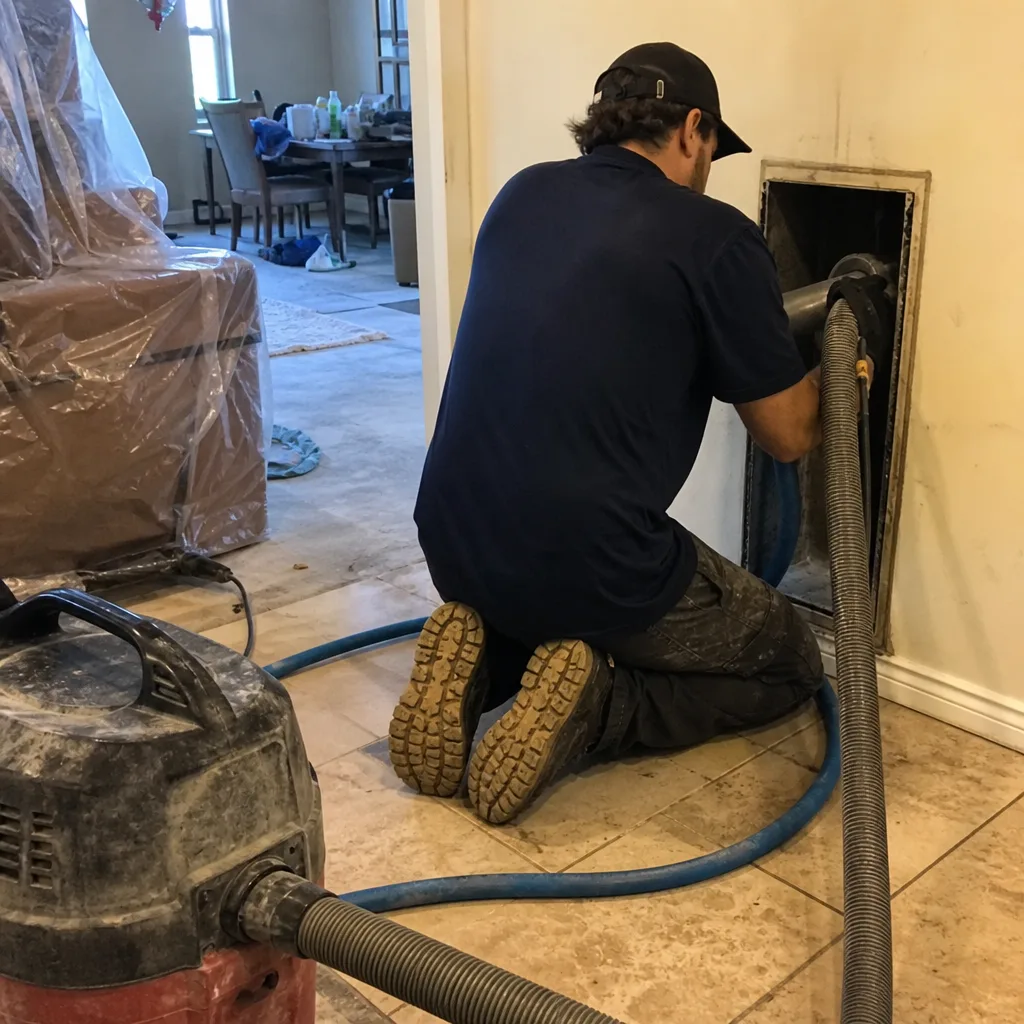 Before
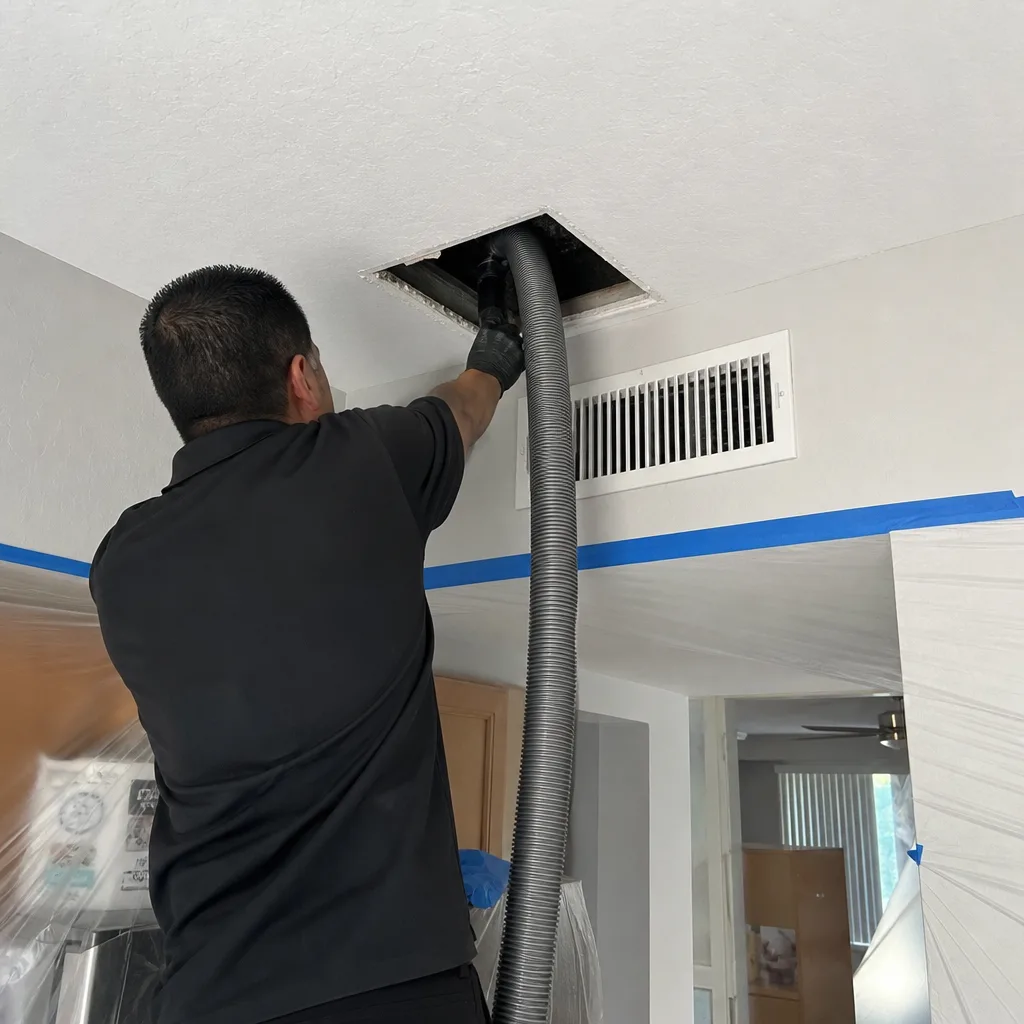 After
After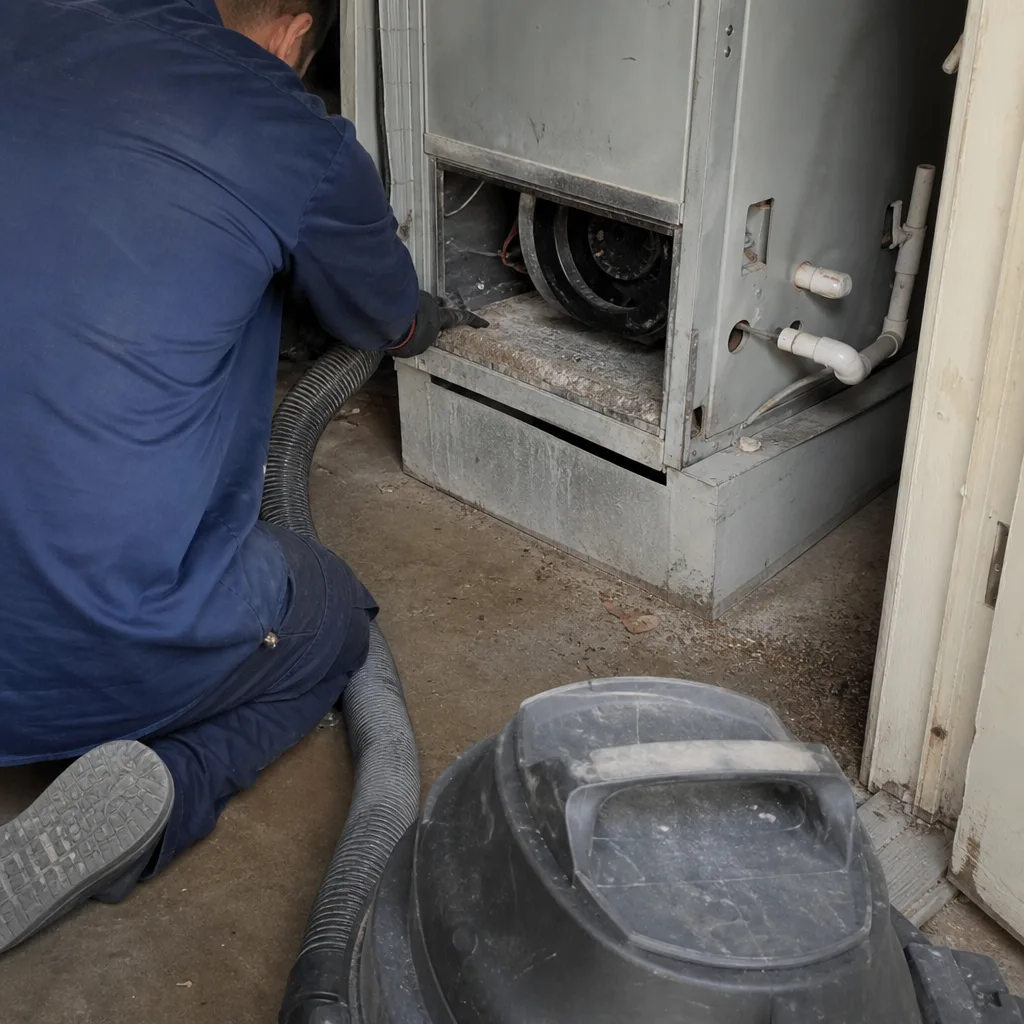 Before
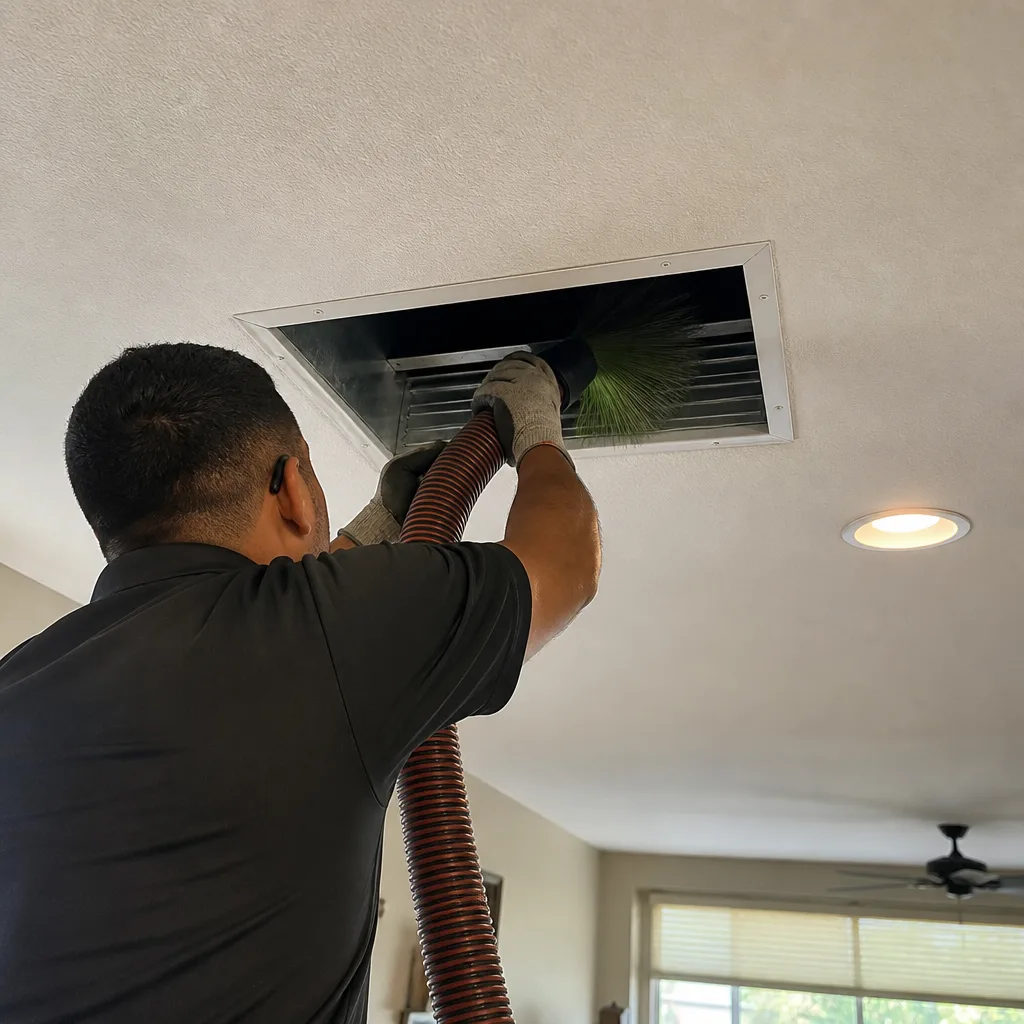 After
After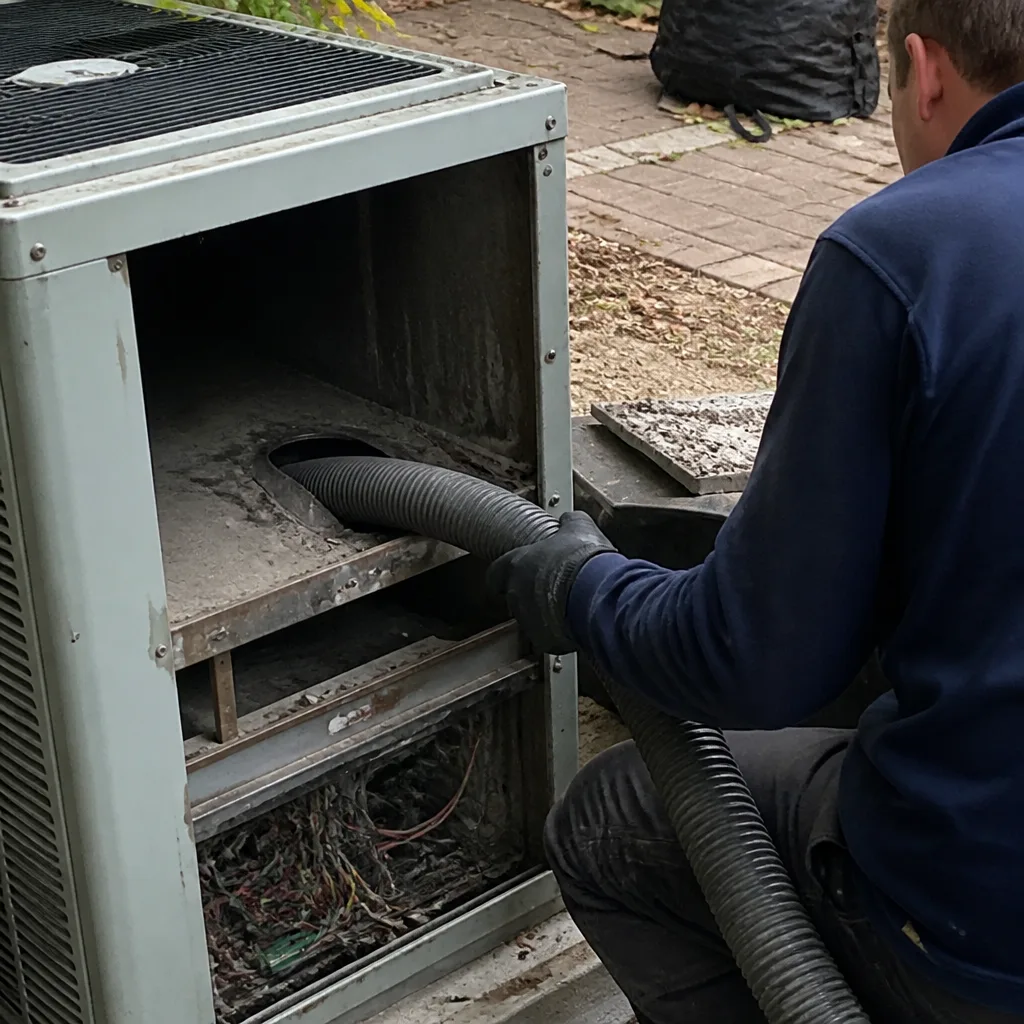 Before
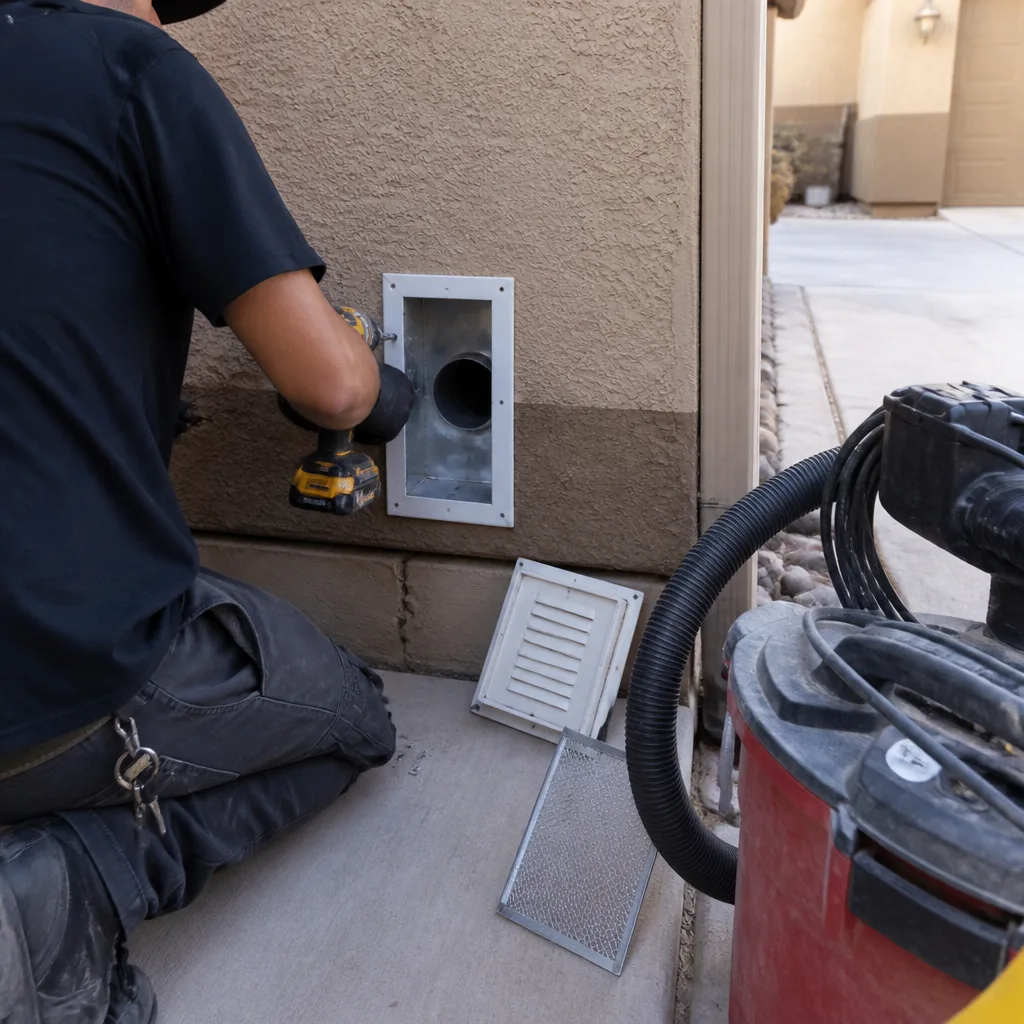 After
AfterAir Duct Cleaning Cost Breakdown: The Chandler Homeowner’s Reference for 2026
Here’s what most Chandler homeowners don’t know: the $79 air duct cleaning coupon that arrives in your mailbox every spring is not a discounted service. It’s a lead-generation tool designed to get a technician inside your home, at which point the actual invoice typically runs $400 to $800 after “discovering” conditions not covered by the coupon. In 2026, a legitimate, complete air duct cleaning for a typical Chandler single-family home costs between $280 and $650 depending on system size and configuration. This guide-along with our Air Duct Cleaning Maintenance Checklist for Chandler Homeowners-publishes the actual numbers, names every component that belongs in a written quote, and shows you how to tell the difference between a documented scope and a vacuum rental with a logo on the van.
Quick Answer
For a 2,000-square-foot single-story home in Chandler with one air handler and standard duct layout, expect to pay $280 to $450 for a complete air duct cleaning in 2026. Two-story homes, larger systems, or homes with separate air handlers for each floor typically range from $380 to $650. Any bid below $200 for a complete system is either omitting major components or planning to upsell once inside.
Table of Contents
- What Legitimate Air Duct Cleaning Pricing Looks Like in Chandler
- Price Ranges by Home Size and System Type
- The Complete Line-Item Breakdown: What Every Quote Should Include
- Add-On Services vs. What Belongs in the Base Price
- How to Read Two Competing Bids Against Each Other
- Why Chandler Prices Vary: Climate, Construction Era, and Code
- What Accountability Actually Costs: The 365-Day Done Right Promise
- Common Mistakes to Avoid
- When to Call a Professional
- Frequently Asked Questions
 Before
 After
AfterWhat Legitimate Air Duct Cleaning Pricing Looks Like in Chandler
The air duct cleaning industry in Chandler operates on two parallel tracks. One track sells documented work with written scopes, photographed results, and prices fixed before the first panel comes off. The other track sells appointments, then constructs invoices inside the customer’s home.
We’ve been on the documented track since 2013. In that time, we’ve cleaned the ductwork in more than 52,000 homes, and we’ve learned that price confusion benefits only the operators who plan to change the number after arrival. The remedy is radical transparency: publish the range, name every component, and let homeowners compare scope instead of hunting for the lowest teaser. You can explore more guides & resources on our blog to help with that comparison.
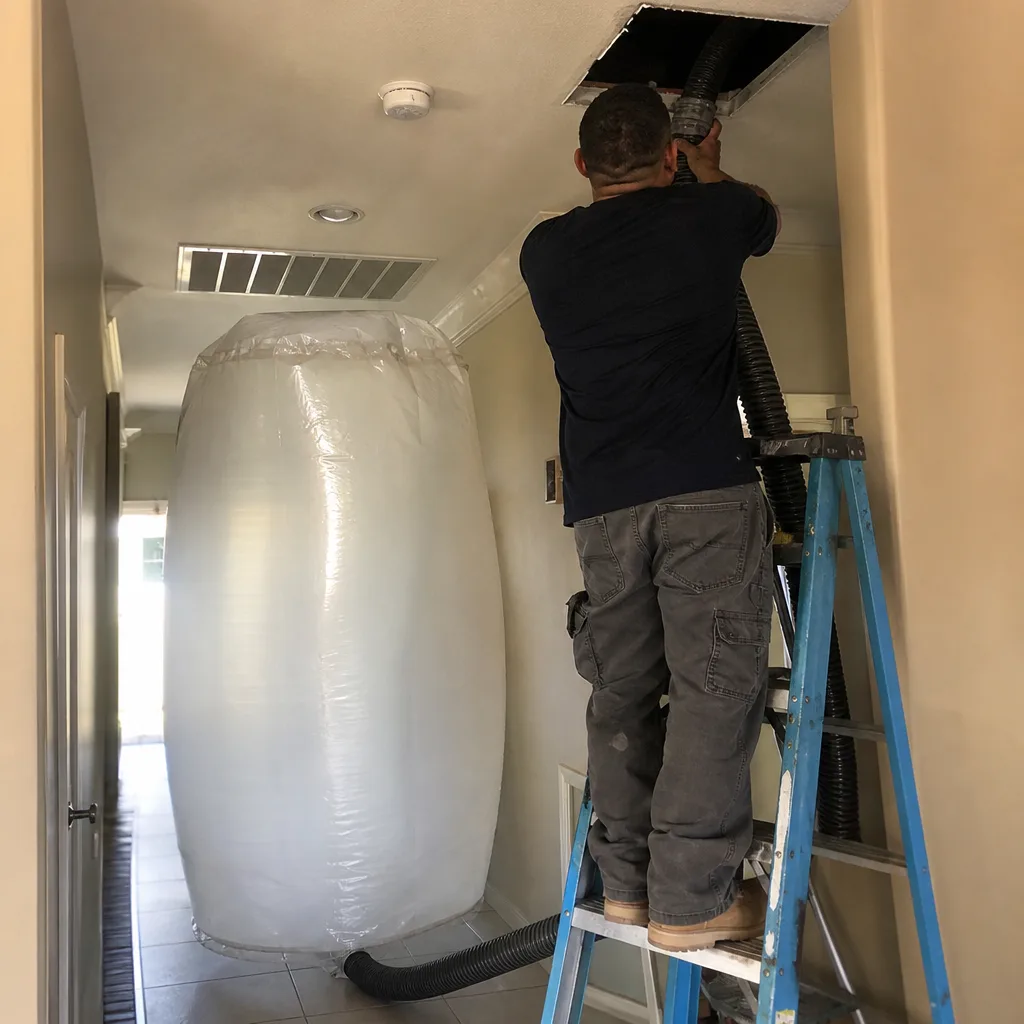
A legitimate quote in Chandler should arrive in writing and contain six to eight specific line items. It should state whether the price is per-system or whole-home. It should specify the equipment class (negative-pressure extraction with HEPA filtration, not a shop vacuum with a long hose). And it should guarantee that the quoted price is the complete price before any work begins.
This is Haven Standard Clause 1, which we apply on every job: written price delivered before work starts, every time. No exceptions. The phrase “call for a quote” does not exist in our process because it cannot produce a documented, comparable scope.
Chandler’s market has specific characteristics that affect legitimate pricing. The city’s rapid growth from 2010 to 2020 produced neighborhoods with uniform tract construction (Ocotillo, Andersen Springs, Cooper Commons) alongside older custom homes in historic downtown and the 85226 corridor. Newer homes often have longer duct runs and more complex return configurations. Older homes may have retrofitted HVAC systems with ductwork that doesn’t match the original design. Both conditions affect labor time and equipment access, which is why flat-rate pricing without inspection can only be approximate at best.
The climate matters too. Chandler’s dust load is heavier than most U.S. markets due to the Sonoran Desert’s fine particulate, seasonal dust storms, and prolonged cooling seasons that keep blowers running eight to ten months annually. Ducts here accumulate debris faster than in temperate climates, and the debris is often finer-grained, requiring more thorough extraction cycles. A technician working in Chandler cannot complete the same scope in the same time as one working in Seattle or Chicago. The price reflects this reality.
Price Ranges by Home Size and System Type
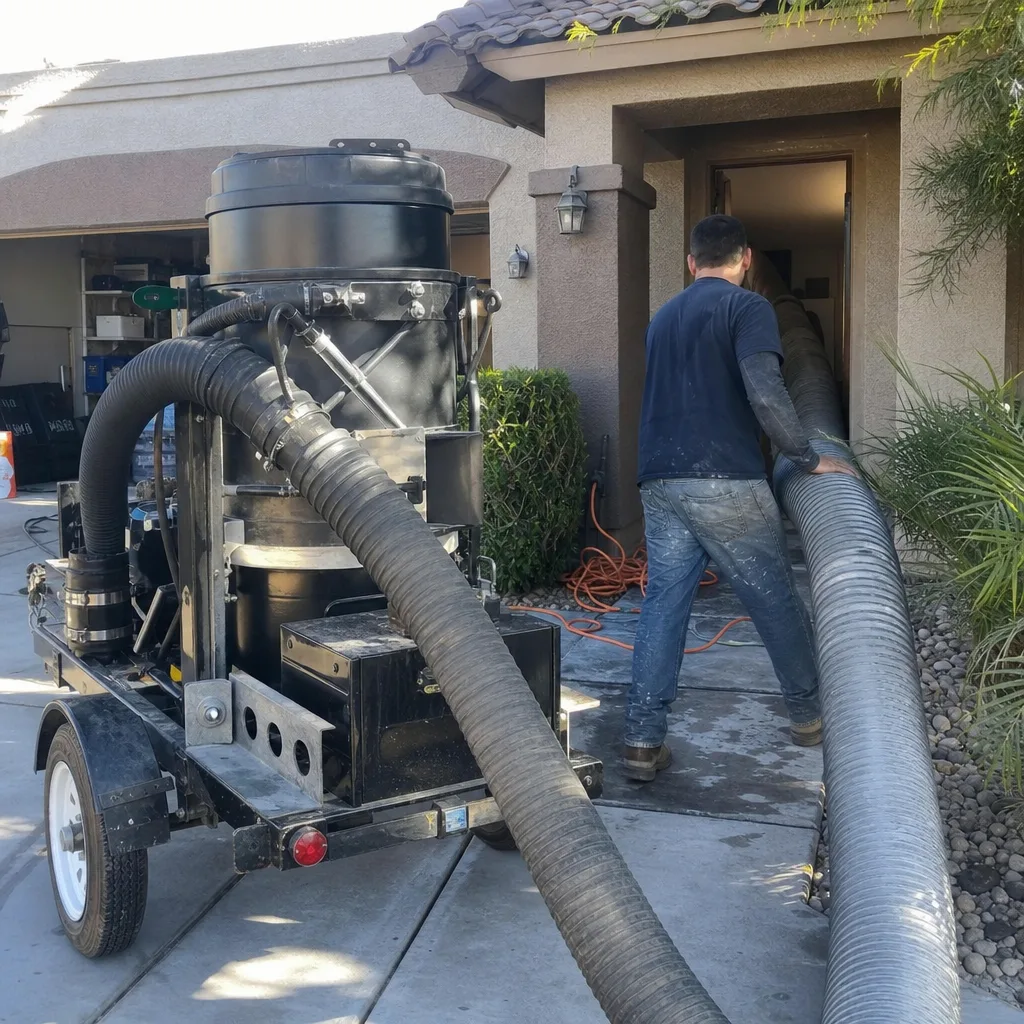
These ranges reflect complete air duct cleaning with negative-pressure extraction, HEPA filtration, and documented photo record of every duct run. They assume standard residential duct construction in Chandler’s typical neighborhoods. Prices include supply runs, return runs, main trunk, and plenum access. They do not include dryer vent cleaning or sanitizing treatments unless noted.
Single-Story Homes Under 1,800 Square Feet
Typical range: $280 to $380
Homes in this category include the smaller tract builds in Chandler’s 85225 and 85224 zip codes, many constructed in the 1980s and 1990s with single air handlers and straightforward duct layouts. The lower end of the range applies to homes with 8 to 12 supply registers, a single return, and accessible plenum. The upper end applies when we find flex duct with excessive sag (common in attics that reach 140°F in July), requiring additional support correction before cleaning, or when the air handler compartment has substantial debris accumulation that must be addressed separately.
In our experience, homes near Chandler Boulevard and McClintock often fall in the middle of this range. The 1950s and 1960s ranch homes in this area have metal ductwork that cleans efficiently but may have accumulated decades of layered debris if never previously serviced.
Single-Story Homes 1,800 to 3,000 Square Feet
Typical range: $320 to $480
This is the most common category in Chandler’s growth corridors: Ocotillo, Fulton Ranch, Sun Groves, and the newer builds in 85249. These homes typically have 14 to 22 supply registers, multiple returns, and sometimes zoned systems with dampers that must be manipulated during cleaning. The price variance depends on register count, duct material (flex vs. metal vs. duct board), and whether the home has a separate return duct system or shared wall cavities.
We’ve noticed that homes built between 2010 and 2018 in this size range often have longer flex duct runs with multiple elbows to accommodate open floor plans. Each elbow reduces airflow efficiency and increases cleaning time. The camera often shows debris accumulation precisely at these elbows, where turbulence drops particulate out of the airstream.
Two-Story Homes
Typical range: $380 to $550
Two-story homes in Chandler present specific challenges. Vertical duct runs between floors require specialized access, and many homes have separate air handlers for each floor or a single air handler with complex zone controls. The upper end of this range applies to homes with two complete systems, which essentially doubles the scope of work.
Neighborhoods like Cooper Commons and Clemente Ranch have many two-story homes with attic-mounted air handlers and long vertical drops to second-floor supplies. In summer, these attics exceed 150°F, and technicians must work in heat-restricted shifts. This extends job duration and is reflected in pricing.
Multi-Unit Properties and Homes with Multiple Systems
Typical range: $480 to $650
Some Chandler homes, particularly larger custom builds in gated communities and properties with guest houses or casitas, have three or more air handlers. Each additional system requires complete setup and breakdown of extraction equipment, separate plenum access, and independent photo documentation. The price scales with system count, not square footage alone.
We’ve also encountered homes in the 85248 hills with ductwork split between main house and detached entertainment structures. These jobs require additional labor for equipment transport and access setup.
Dryer Vent Cleaning (Add-On or Standalone)
Typical range when added to duct cleaning: $85 to $150
Typical range standalone: $120 to $195
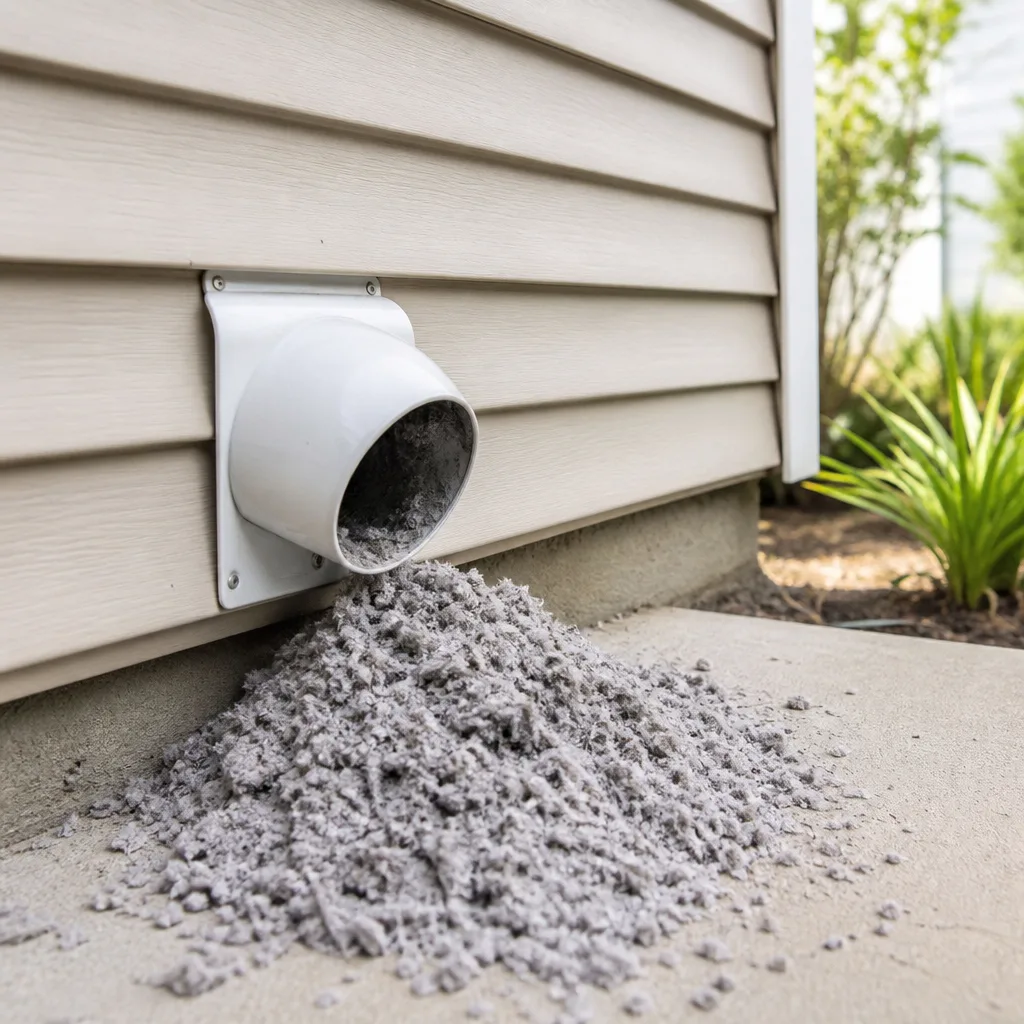
Dryer vent cleaning in Chandler is often necessary because the same fine dust that fills ducts coats dryer exhaust systems, particularly in homes with long vent runs through hot attics where lint hardens and adheres. We address this in our Dryer Vent Cleaning in Chandler service page, but as an add-on to air duct cleaning, it typically adds 30 to 45 minutes and requires separate equipment.
The Complete Line-Item Breakdown: What Every Quote Should Include
A written quote that satisfies Haven Standard Clause 1 should contain specific language for each component. Below is the complete list, with plain-language explanations for terms that technicians use routinely but homeowners rarely encounter.
1. Supply Runs (Supply Ducts)
These are the ducts that carry conditioned air from your air handler to each room register. A typical Chandler home has one supply run per register, though some rooms may have multiple registers fed by a single branched duct. The quote should state the number of supply runs to be cleaned and the method (typically negative-pressure extraction with agitation).
What to verify: that “per register” pricing is not being substituted for complete run cleaning. Some operators clean only the first few feet of duct behind each register, leaving the majority of the run untouched. The photo record should show the full length.
2. Return Runs (Return Ducts)
Return ducts pull air from your living space back to the air handler for reconditioning. They are typically larger than supply ducts and often run through wall cavities or bulkheads rather than dedicated ductwork. In Chandler homes, return runs frequently accumulate the heaviest debris because they are unfiltered pathways (the filter sits at the air handler, not at the return grille in most systems).
What to verify: that wall-cavity returns are included if they form part of your system. Some quotes exclude these by default, citing “inaccessible construction.”
3. Main Trunk Line
The main trunk is the large central duct, typically rectangular, that distributes air to the individual supply runs. Think of it as the highway that feeds the neighborhood streets. It accumulates debris differently than branch runs, often showing layered buildup at the bottom where gravity deposits particulate during system off-cycles.
What to verify: that the trunk is accessed at multiple points, not just at the plenum connection. A single access point may not provide complete cleaning of a long trunk, particularly in larger Chandler homes.
4. Plenum
The plenum is the sheet-metal box that sits directly on top of (or below) your air handler, connecting it to the main trunk and return system. It’s the junction point where all airflow converges, and it’s often the most debris-heavy component because it’s the first surface air contacts after passing through (or around) the filter.
What to verify: that plenum cleaning includes both supply and return sides, and that the filter rack or housing is inspected and cleaned if accessible.
5. Air Handler Compartment
This is the interior of the HVAC unit itself: the blower housing, evaporator coil area (if accessible without refrigerant disturbance), and filter slot. While not technically “ductwork,” this compartment communicates directly with your ducts and can recontaminate them immediately if not addressed.
What to verify: that this is included in the base scope, not presented as a mid-job discovery. Some operators use “dirty blower” as an upsell trigger after quoting a low base price.
6. Register and Grille Cleaning
The visible components in your rooms should be removed, cleaned, and reinstalled. This is labor-intensive but necessary, as registers often harbor debris and biological growth that would immediately re-enter the system.
What to verify: that removal and reinstallation are specified, not just “surface wiping.” Painted-over registers in older Chandler homes may require careful handling to avoid damage.
7. Access Panel Installation and Sealing
Proper duct cleaning requires access points that don’t exist in standard construction. Technicians must cut access panels, clean through them, then seal them with code-compliant materials. The quote should specify that access panels are included and that sealing meets local requirements.
Chandler follows the International Mechanical Code with Arizona amendments, which requires that duct access panels be sealed to prevent air leakage. For details on regulatory requirements, see our guide to Air Duct Cleaning Permits, Codes & Inspections in AZ: What You Need to Know. Unsealed or poorly sealed access points can reduce system efficiency by 10% or more.
Add-On Services vs. What Belongs in the Base Price
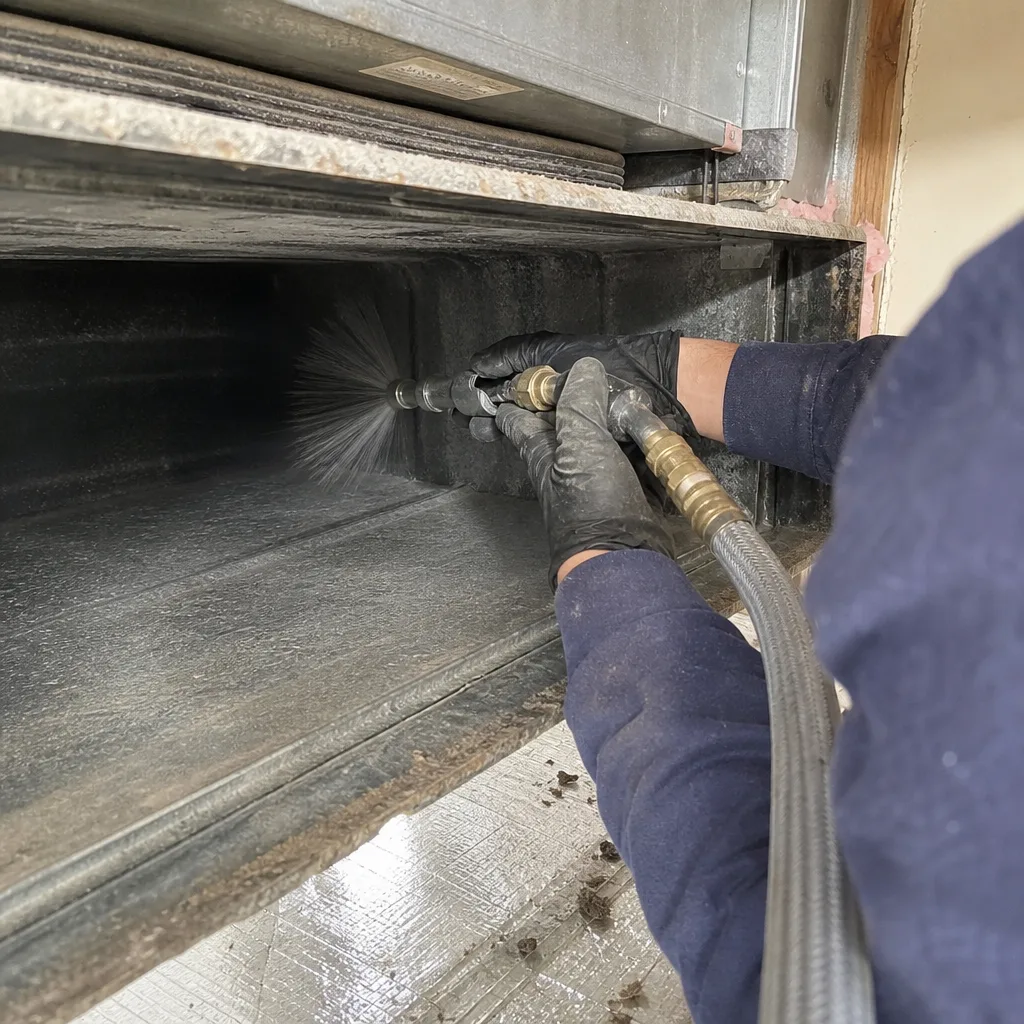
The industry’s most effective bait-and-switch technique is to quote a low base price that omits components any legitimate job requires, then present “add-ons” as necessary upgrades once work is underway. Here’s how to distinguish legitimate optional services from components that should be included.
What Should Be Included in Every Base Quote
- All supply runs to completion (not just register vicinity)
- All return runs, including wall cavities if they are functional returns
- Main trunk line, accessed at multiple points
- Supply and return plenums
- Air handler compartment (blower housing, accessible coil)
- Register and grille removal, cleaning, and reinstallation
- Access panel creation and code-compliant sealing
- HEPA-filtered negative-pressure extraction equipment
- Documented photo record of every component, before and after
What Is Legitimately Priced Separately
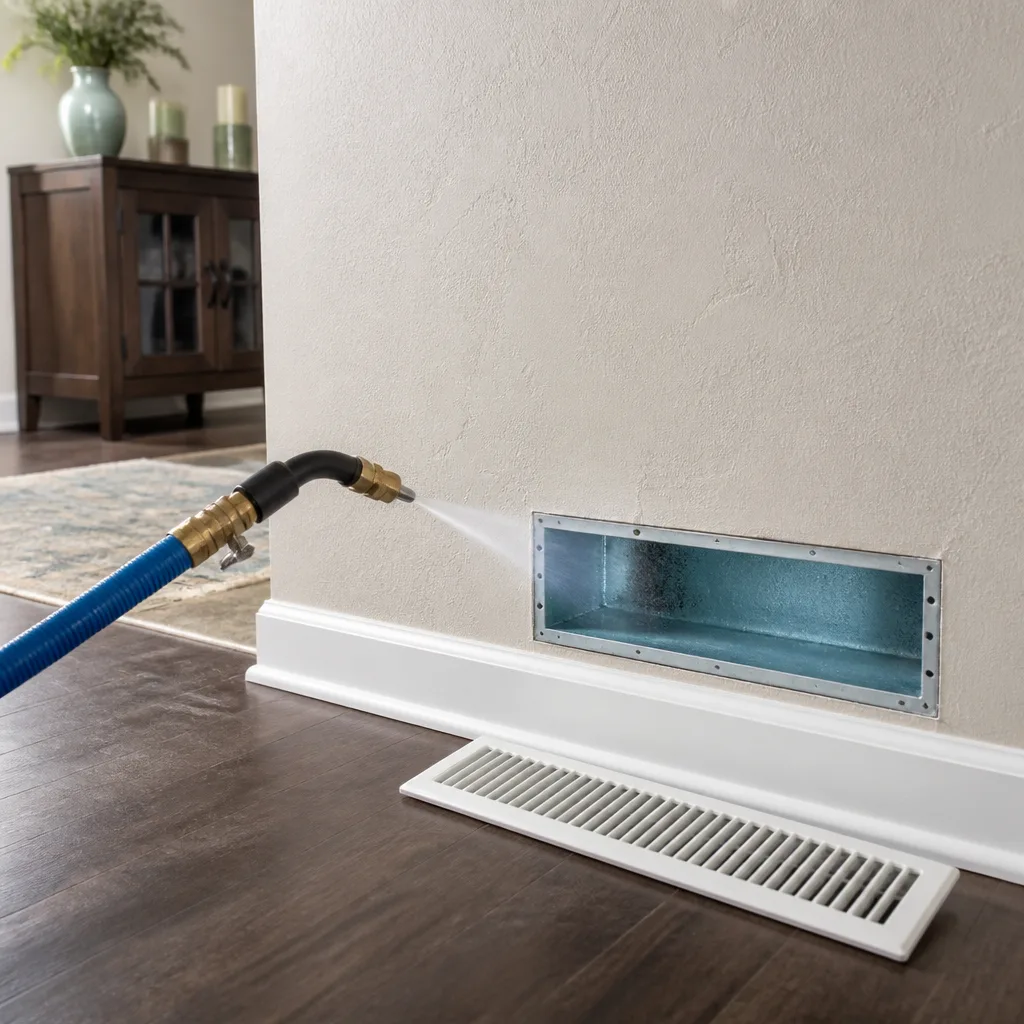
Sanitizing or antimicrobial treatment: This is a chemical application, not a mechanical cleaning step. It should be optional and priced separately, typically $75 to $150 depending on system size. We use EPA-registered products applied with controlled droplet equipment, not foggers that saturate components. The treatment is documented in the photo record.
Mold remediation: If visible mold growth is present in ductwork, standard cleaning is insufficient. Mold remediation requires specific protocols, containment, and often third-party verification. This is a separate service with separate pricing, and any contractor who discovers “mold” mid-job without prior indication should be able to show you the growth on camera before discussing remediation.
Dryer vent cleaning: As noted above, this is a distinct system with distinct equipment requirements. It is legitimately priced as an add-on or standalone service.
Duct repair or sealing: Disconnected ducts, degraded flex duct, or significant leakage should be addressed, but this is repair work, not cleaning. It requires separate scope and pricing. Our Air Duct Cleaning in Chandler service includes inspection for these conditions, with repair quoted separately if needed.
Red Flags: “Add-Ons” That Should Be Base Scope
Be alert for these mid-job upsells, which indicate an intentionally incomplete initial quote:
- “Deep cleaning” of individual runs (all runs should receive equivalent treatment)
- Plenum or air handler “access fees” (these are required for any complete job)
- HEPA filtration as an upgrade (this is standard equipment for legitimate operators)
- “Debris disposal” charges (included in base overhead for any licensed contractor)
- Register removal fees (impossible to clean properly without this step)
How to Read Two Competing Bids Against Each Other
Most homeowners compare air duct cleaning quotes by the bottom-line number. This is exactly what the low-ball operator intends. The correct comparison method is scope alignment followed by verification protocol.
Step 1: Line-Item Alignment
Take both written quotes and create a simple checklist. Mark which quote includes each component from the list above. If one quote lacks specific language about return runs, plenum, or air handler compartment, it is not a lower price for the same service. It is a lower price for a lesser service.
We’ve reviewed competitor quotes brought in for our Free Second Opinion service, and the most common omission is the return system. Some quotes specify “12 supply registers” with no mention of returns at all. In a typical Chandler home, the return system represents 30% to 40% of total duct surface area. Omitting it is not a savings. It’s incomplete work.
Step 2: Equipment Verification
Ask each contractor to specify the equipment brand and model they will use. Professional-grade duct cleaning equipment comes from recognized manufacturers: Rotobrush, Nikro, Abatement Technologies, and others. These are verifiable products with published specifications.
A shop vacuum with a 25-foot hose is not duct cleaning equipment. It cannot generate the negative pressure required to extract fine debris from a complete duct run, and it has no HEPA filtration to prevent redistribution into your home. If a contractor cannot or will not name their equipment, this is information worth having.
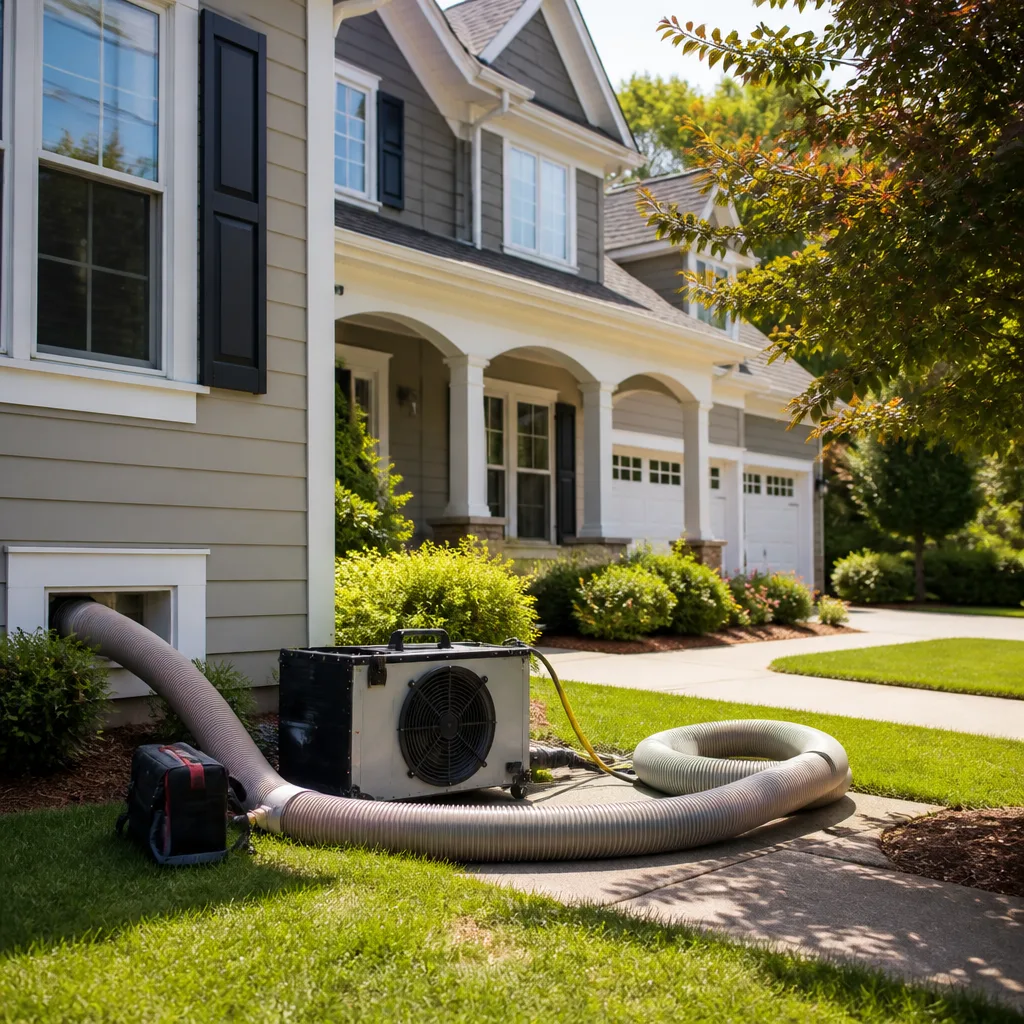
At CleanRun, we operate Rotobrush and Nikro negative-pressure systems with HEPA filtration, along with Abatement Technologies portable extraction units for complex access situations. Customers can look up these specifications independently, which is precisely the point.
Step 3: Documentation Commitment
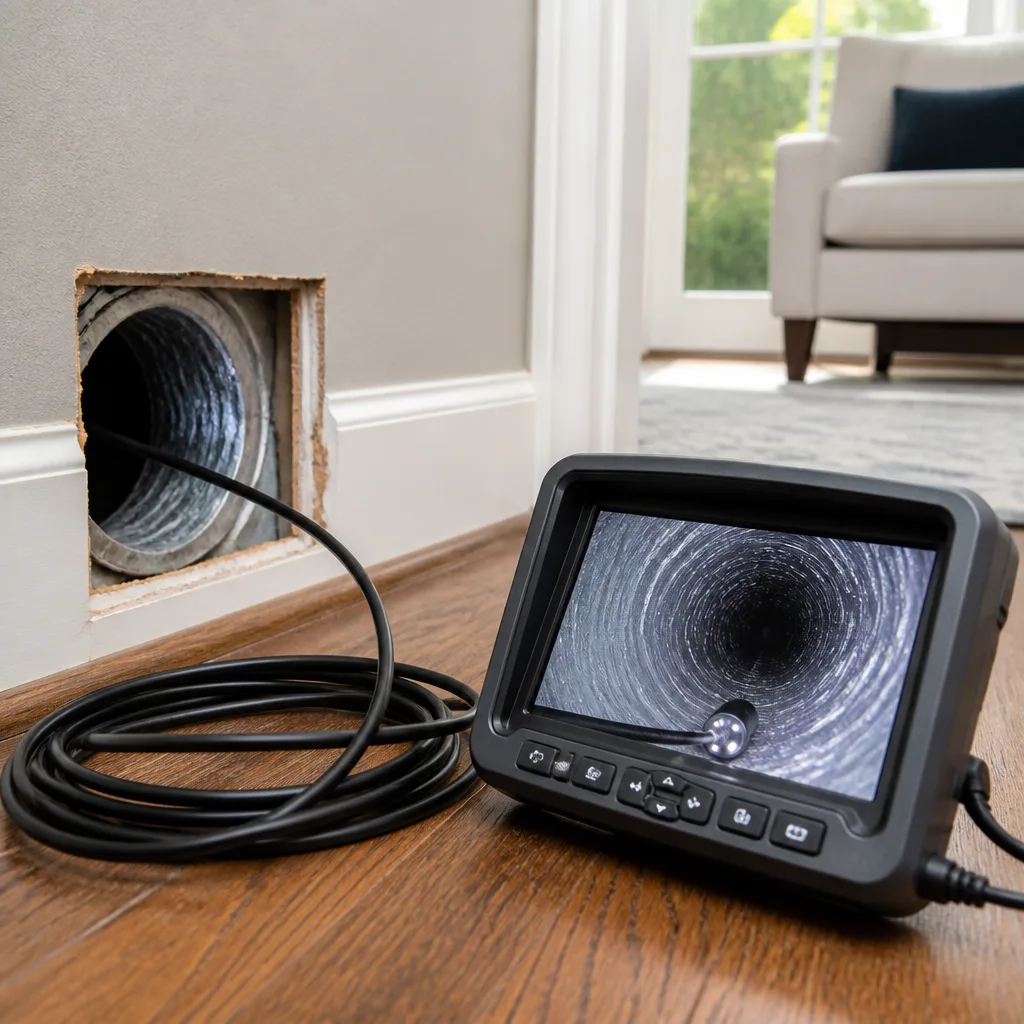
Ask what documentation you will receive. The answer should be specific: “Photos of every duct run before and after cleaning, delivered electronically within 24 hours.” Vague assurances of “we’ll show you” or “our technician will explain” are not documentation.
Since 2013, we’ve photographed every duct run on every job. The photo record is included as a standard deliverable, not an upgrade. This practice began with our first job because we recognized that visual evidence is the only proof that distinguishes real work from vacuum noise.
Step 4: Price Protection
Verify that the quoted price is guaranteed complete before work begins. Haven Standard Clause 1 requires this in writing. If a quote contains language like “subject to conditions found on site” or “additional charges may apply,” the price is not fixed.
The only legitimate variable is duct repair or conditions that could not be reasonably discovered during initial inspection, such as collapsed flex duct behind drywall. These should be documented on camera, explained to you, and quoted separately with your approval before any additional work proceeds.
Why Chandler Prices Vary: Climate, Construction Era, and Code
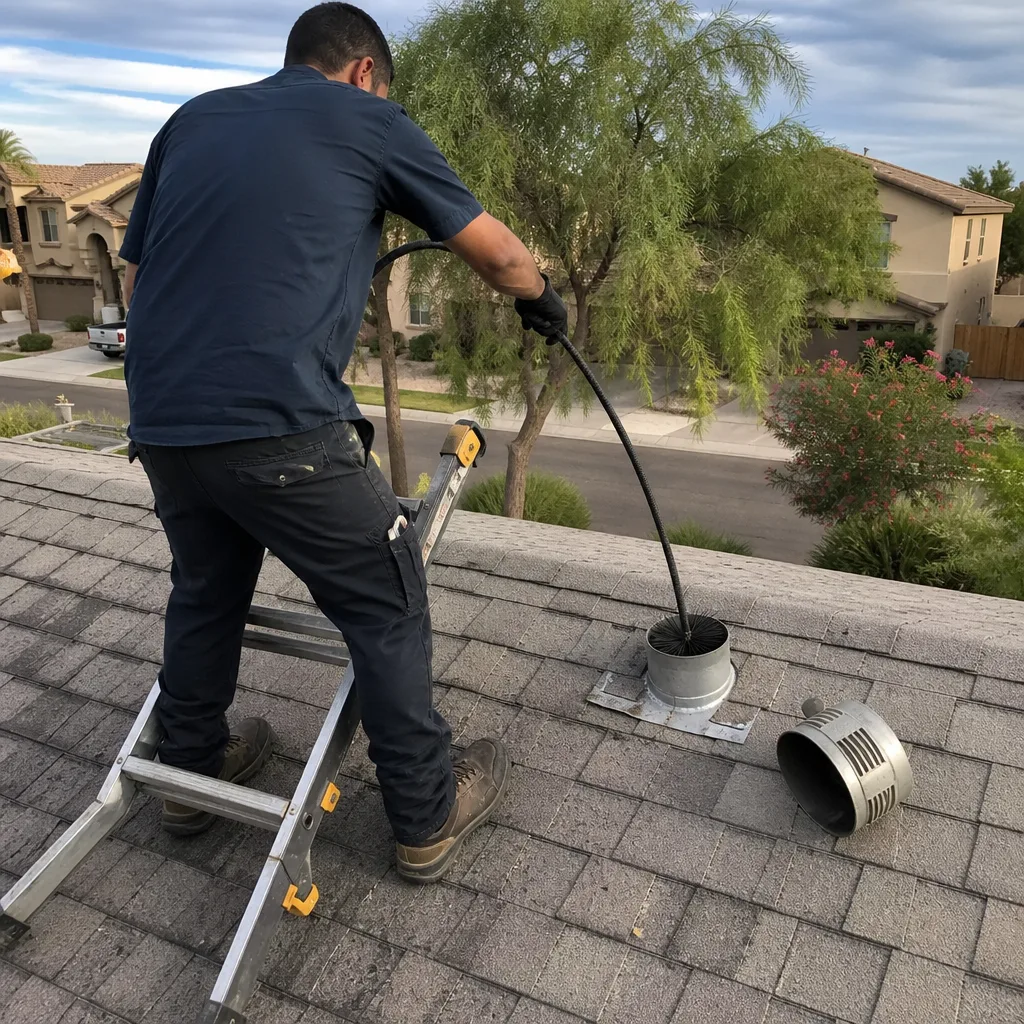
Understanding why prices differ across markets and even across Chandler neighborhoods helps homeowners evaluate whether a quote is appropriately calibrated or arbitrarily inflated.
Climate Load Factors
Chandler’s climate imposes specific burdens on duct systems that don’t exist in most U.S. markets. The Sonoran Desert produces fine particulate matter (PM2.5 and PM10) that penetrates standard filtration. Prolonged cooling seasons mean blowers operate 2,500 to 3,500 hours annually, compared to 1,000 to 1,500 in temperate climates. Dust storm events (haboobs) can load a system with weeks of normal debris in a single afternoon.
This means Chandler ducts typically contain more debris, and the debris is finer and more adherent. Extraction requires longer contact time and more aggressive agitation. A technician who quotes based on national averages or experience in milder climates will either underprice and cut corners, or arrive and discover the scope exceeds their estimate.
Construction Era Effects
Chandler’s building stock spans seven decades with distinct duct characteristics:
- Pre-1980 homes (downtown Chandler, historic neighborhoods): Often galvanized steel ductwork with asbestos-containing duct sealant or insulation. These require modified protocols and cannot be cleaned with the same agitation intensity as modern systems. Some may need partial duct replacement rather than cleaning.
- 1980-2000 homes (Chandler Boulevard corridor, older subdivisions): Transition period with mixed materials. Flex duct became common but installation quality varied widely. We’ve found many homes in this era with unsupported flex sagging below insulation, creating debris traps.
- 2000-2010 homes (Andersen Springs, Cooper Commons early phases): Generally better duct installation but longer runs due to larger floor plans. More complex return configurations with multiple return grilles per system.
- 2010-present (Ocotillo, Fulton Ranch, new growth areas): Tight construction with engineered duct systems, but often very long flex runs with multiple elbows to serve open plans. Some have energy recovery ventilators or whole-house dehumidifiers that add complexity.
Local Code and Permit Context
Chandler requires mechanical permits for duct modifications, including significant access panel creation in certain configurations. Legitimate contractors factor permit compliance into their pricing and process. Unpermitted work may be cheaper but creates liability for the homeowner and can complicate future sales or insurance claims.
The city also enforces the International Energy Conservation Code (IECC) requirements for duct sealing, which affects how access panels must be closed and tested. Our technicians are trained to these standards, and our documentation includes verification of sealed access points.
What Accountability Actually Costs: The 365-Day Done Right Promise
Every CleanRun job includes the 365-Day Done Right Promise, backed in writing on every invoice. If the work is not right, we make it right. This is not a marketing slogan. It is a contractual obligation with specific costs that are built into our pricing structure.
The Infrastructure of Accountability
Maintaining a one-year performance guarantee requires systems that low-price operators typically do not maintain:
- Documented photo archive: Every job’s complete photo record is stored for the guarantee period, allowing any callback to be evaluated against the original condition. This is server infrastructure, backup systems, and retrieval labor.
- Technician identification and tracking: Haven Standard Clause 3 requires verified crews. Every technician is background-checked, uniformed, and identified by name before arrival. Crew assignments are logged to specific jobs for accountability.
- Quality verification protocol: A percentage of jobs receive unannounced post-completion review, including customer contact and photo re-verification. This is labor cost that does not exist in the low-price model.
- Callback reserve: We maintain financial reserve for guarantee fulfillment. This is not insurance; it is direct obligation funding. The cost is distributed across all jobs, which affects base pricing.
The alternative is no guarantee, or a “satisfaction guarantee” that requires manager approval and offers no specific remedy. We’ve chosen the specific, written, one-year obligation because it aligns our incentives with the customer’s outcome.
This is why our prices are not the lowest in the Chandler market. They are prices that allow us to perform documented work, stand behind it for twelve months, and remain in business to fulfill that obligation. The $79 coupon operator cannot absorb a callback without losing money on the job; their business model depends on no one calling back.
Common Mistakes to Avoid
- Comparing only the bottom-line number without line-item verification. A $220 quote that omits return ducts and plenum cleaning is not cheaper than a $380 quote that includes them. It is incomplete work priced to appear competitive.
- Assuming “EPA certified” means something specific about duct cleaning. The EPA does not certify duct cleaning services. Some operators use this language to imply endorsement. Ask what the certification specifically covers.
- Accepting verbal quotes or “we’ll see when we get there” pricing. This structure invites invoice inflation. Written price before work starts is the only structure that protects you.
- Ignoring the photo record requirement. If a contractor cannot or will not show you the inside of your ducts before and after, you have no verification that work occurred. This is particularly important in Chandler, where fine desert particulate is not always visible at register openings.
- Scheduling based on coupon expiration dates. Artificial urgency is a sales technique, not a service advantage. Legitimate duct cleaning is scheduled at your convenience, not driven by promotional deadlines.
- Failing to verify that the quoted company will perform the work. Some national lead-generation services quote low prices then subcontract to unvetted technicians. Verify that the entity quoting is the entity performing, with licensed, identified personnel.
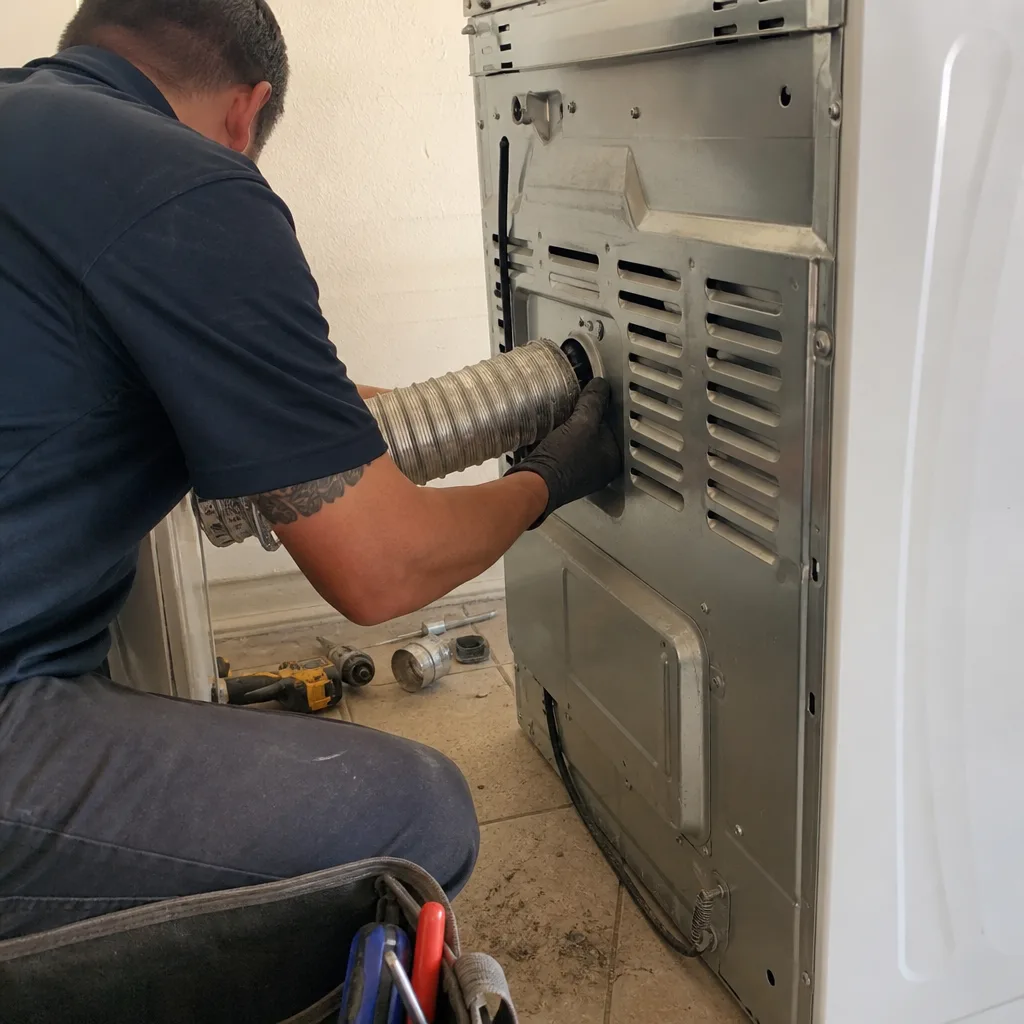
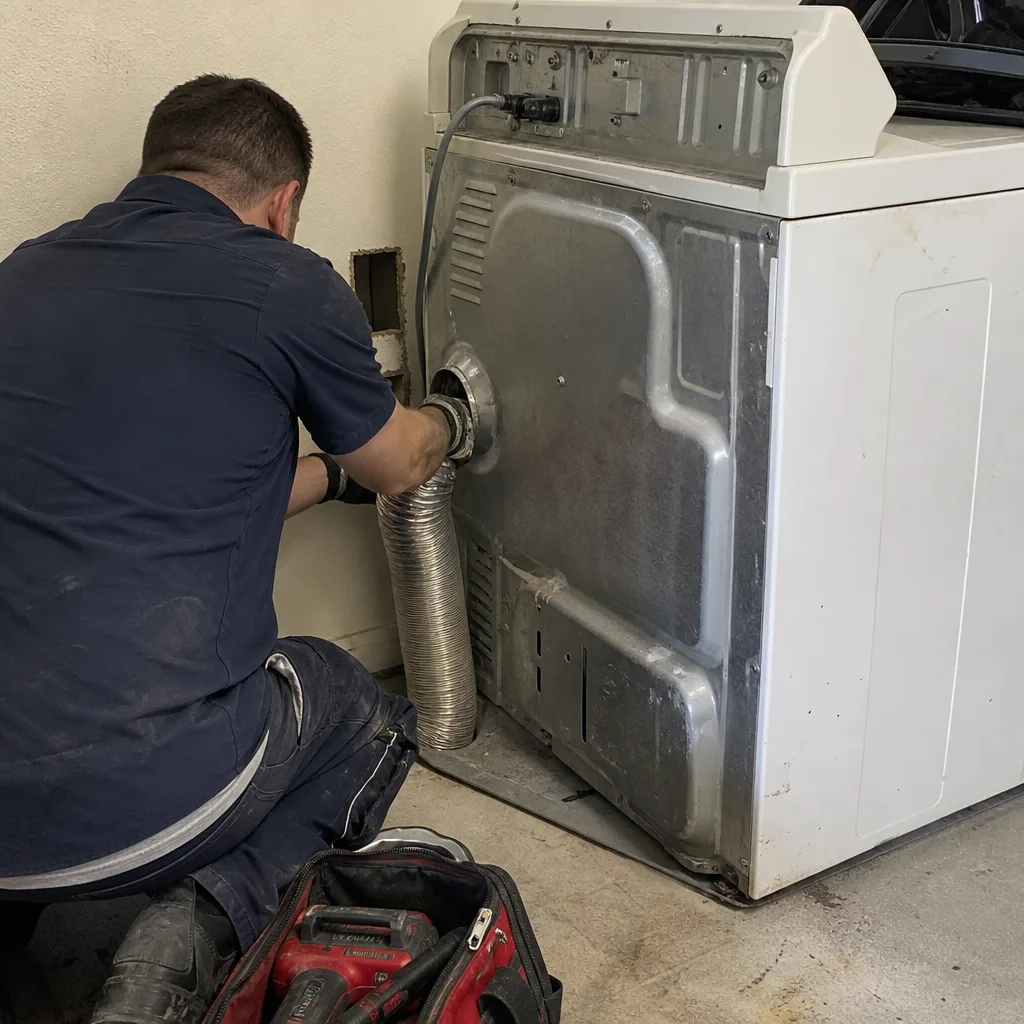
- Neglecting dryer vent cleaning when ducts are being serviced. The same conditions that load your ducts affect your dryer vent, and the proximity of service calls makes combined scheduling efficient. Our Dryer Vent Cleaning in Chandler page details specific fire-safety considerations for this combined service.
When to Call a Professional
Schedule air duct cleaning when you can document one or more of these conditions: visible debris at registers, reduced airflow at distant rooms, musty or stale odors when the system cycles, or if your home has never had duct cleaning and was constructed before 2015. In Chandler’s climate, we generally recommend evaluation every four to six years for homes with standard filtration, sooner if you have pets, recent construction, or respiratory sensitivities.
More urgent signs include mold visible at registers (requires professional assessment, not just cleaning), insect or rodent evidence in ductwork, or sudden airflow changes after roofing or remodeling work that may have introduced debris.
CleanRun Air Duct Cleaning Chandler offers free estimates in Chandler. We’ll inspect your system, photograph the interior conditions, and deliver a written price before any work begins. Call (520) 464-6297 to schedule. For related services, see our HVAC Cleaning in Chandler page.
Frequently Asked Questions
In 2026, complete air duct cleaning for a typical Chandler home ranges from $280 for smaller single-story homes to $650 for large or multi-system properties. The exact price depends on system size, duct material, accessibility, and whether legitimate line items (all supply runs, all return runs, main trunk, plenum, air handler compartment) are included. Call (520) 464-6297 for a written estimate specific to your home.
Low quotes typically omit components that any complete job requires, or they plan to present “discovered” conditions after arrival to inflate the invoice. A $79 to $150 quote cannot cover complete negative-pressure extraction with HEPA filtration, professional equipment, licensed technicians, and documentation. The math does not work. The difference is not efficiency; it is scope omission or bait-and-switch intent.
Require a documented photo record of every duct run, before and after cleaning. This should be delivered to you as a standard job deliverable, not an upgrade. At CleanRun, we’ve included this on every job since 2013. The photo record is your verification that extraction occurred throughout the system, not just at accessible points.
In Chandler’s desert climate with extended cooling seasons, we recommend evaluation every four to six years for homes with standard 1-inch pleated filters. Homes with upgraded filtration (4-inch media or electronic air cleaners), no pets, and no recent construction may extend toward the longer interval. Homes with multiple pets, recent remodeling, or located near active construction should consider shorter cycles. The camera inspection is the only accurate determination.
A legitimate quote should list every component to be cleaned: number of supply runs, number of return runs, main trunk line, supply and return plenums, air handler compartment, and register/grille cleaning. It should specify the equipment type, guarantee the price as complete before work begins, and commit to documentation. Anything less is not a comparable quote.
Sanitizing is legitimately optional. It applies antimicrobial treatment to cleaned duct surfaces and is appropriate when microbial growth has been documented, when occupants have specific sensitivities, or when requested for peace of mind after cleaning. It is not required for every job, and it should be priced separately, not bundled into a vague “complete package.” We use EPA-registered products applied with controlled equipment, documented in the photo record.
The Bottom Line
Air duct cleaning in Chandler costs between $280 and $650 in 2026 for legitimate, complete service. The exact figure depends on your home’s size, system configuration, and duct condition. The more important number is what the quote contains: every supply run, every return run, main trunk, plenums, air handler compartment, and documented proof of work. Any bid that omits components or refuses to fix the price in writing is not a deal. It is a risk.
We’ve published these ranges and this breakdown because Haven Standard Clause 1 requires written pricing, and because homeowners who understand scope make better decisions. The industry has operated too long on obscured pricing and post-arrival invoice construction. The alternative is documented, photographed, guaranteed work at a price that allows accountability.
Written by Tomas Reyes, Owner at CleanRun Air Duct Cleaning Chandler, serving Chandler since 2013.