
Last updated September 23, 2026
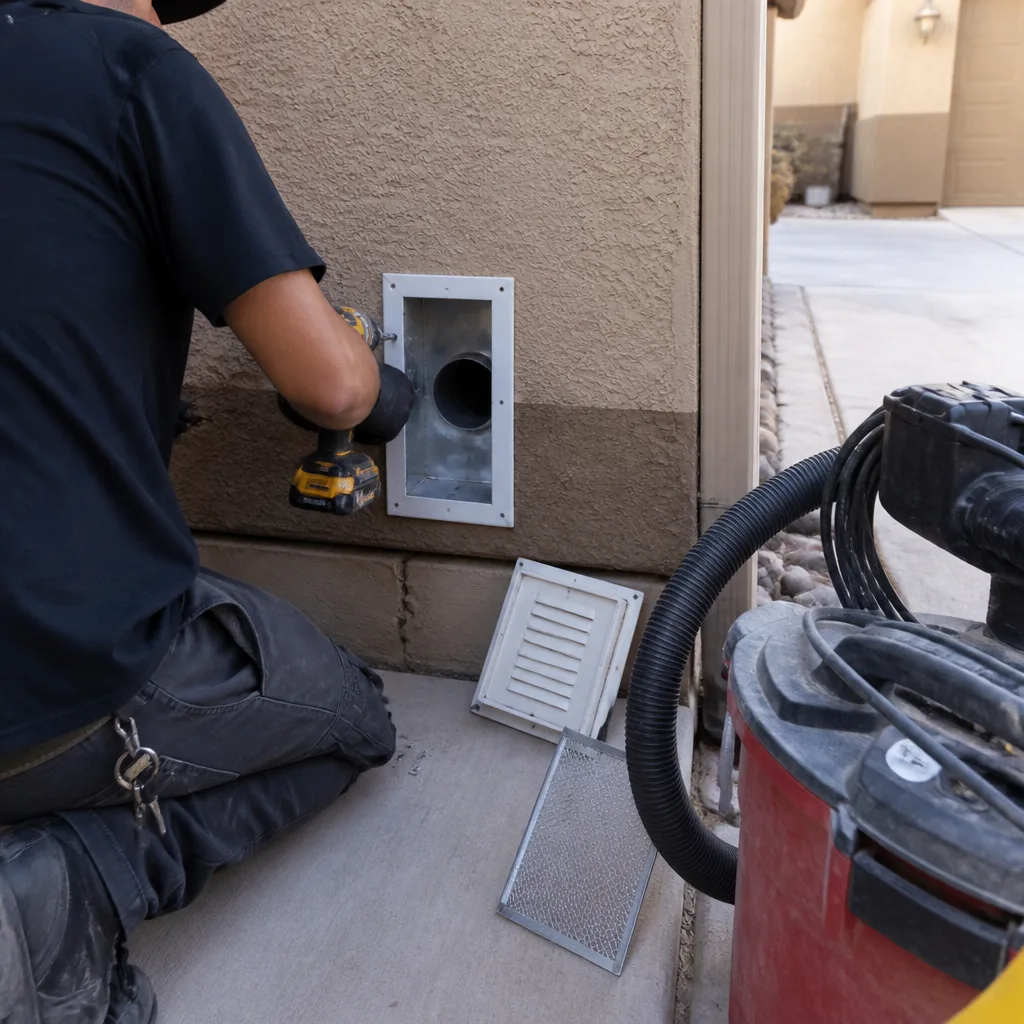
Whole-system duct and dryer vent check with before-and-after photos - you see exactly what came out of your vents
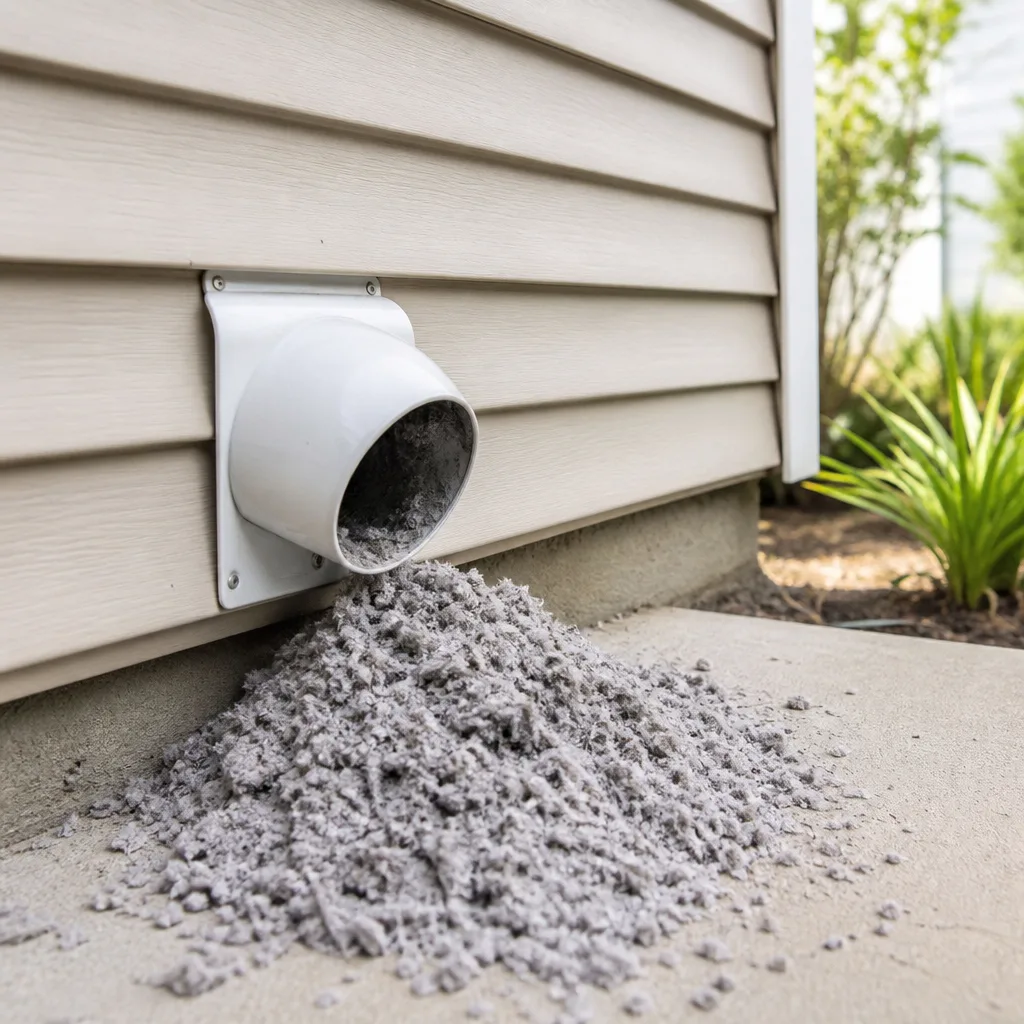
That "$99 whole-house special" is a bait ad - the real number appears once they are in your hallway, or the "clean" is a shop-vac at the register. We photograph the inside of your ducts before and after instead.
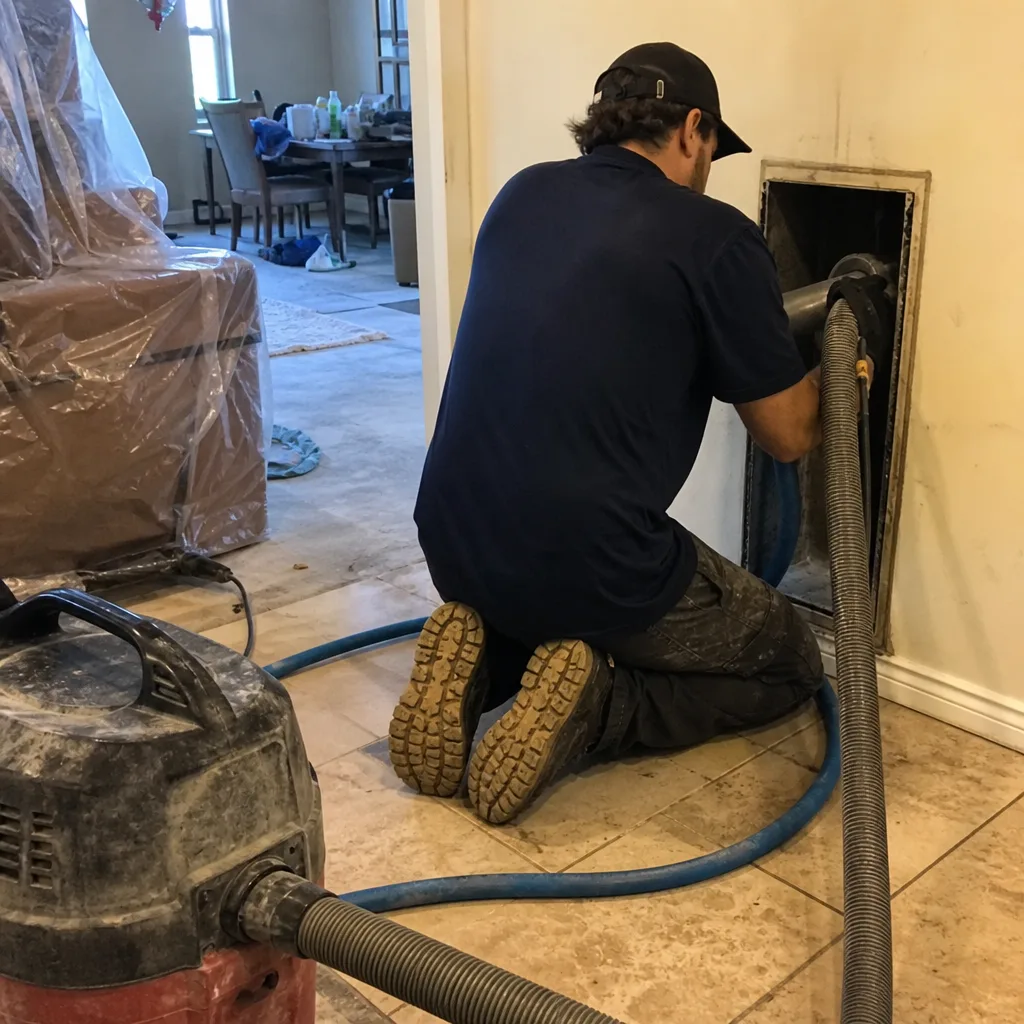 Before
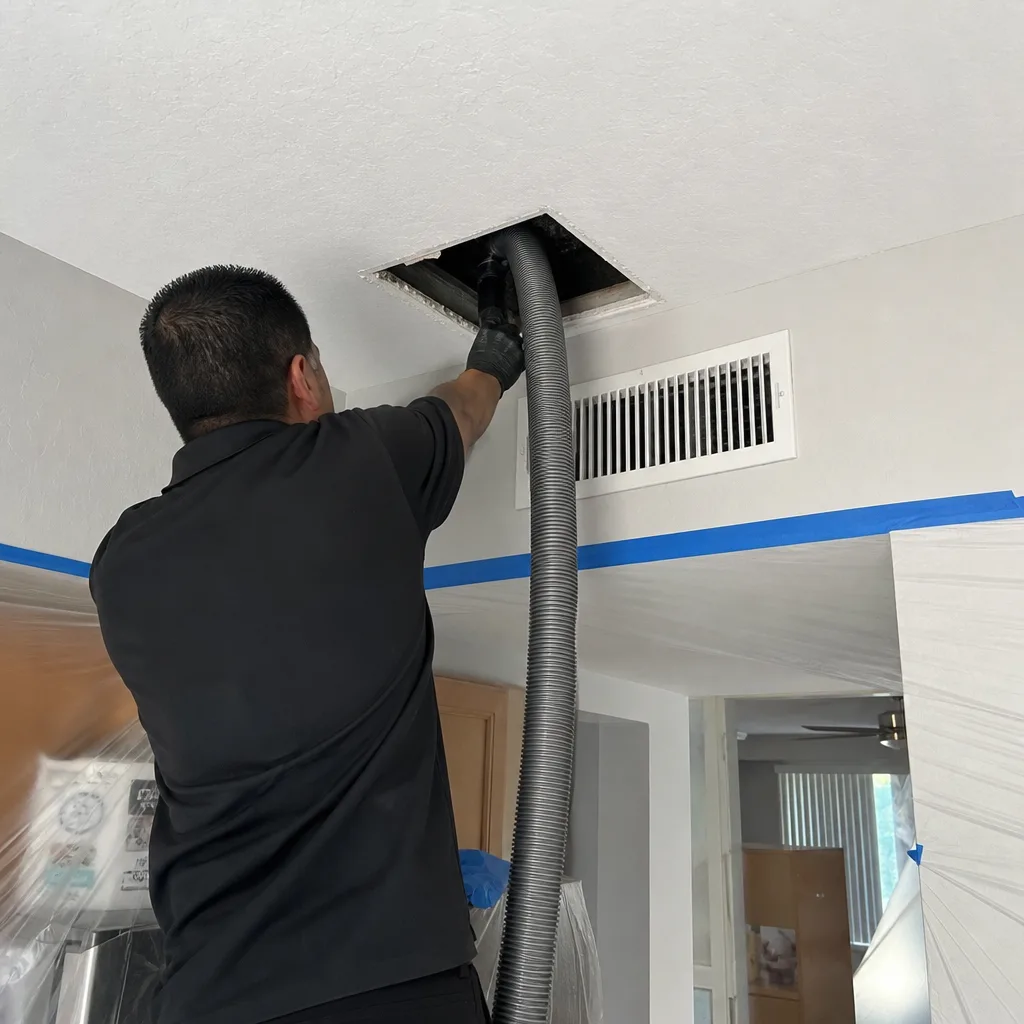 After
After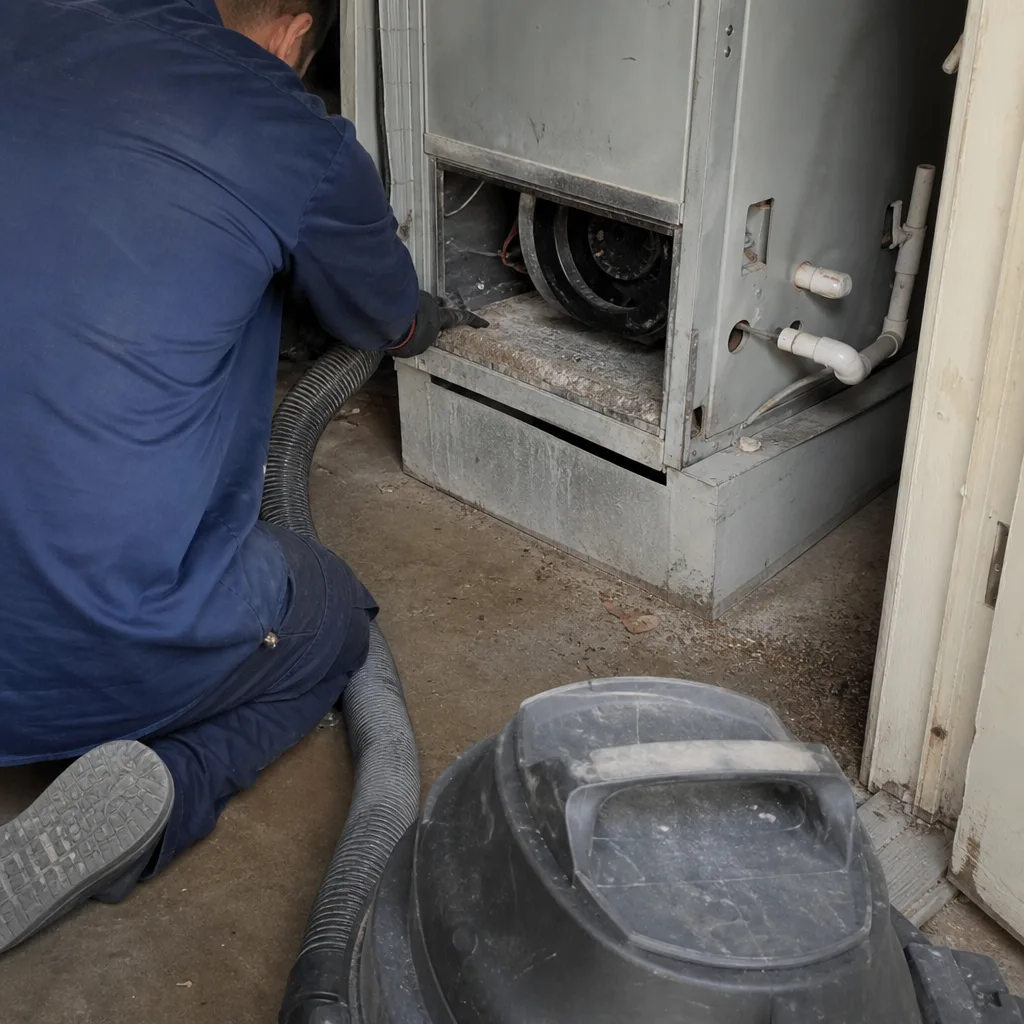 Before
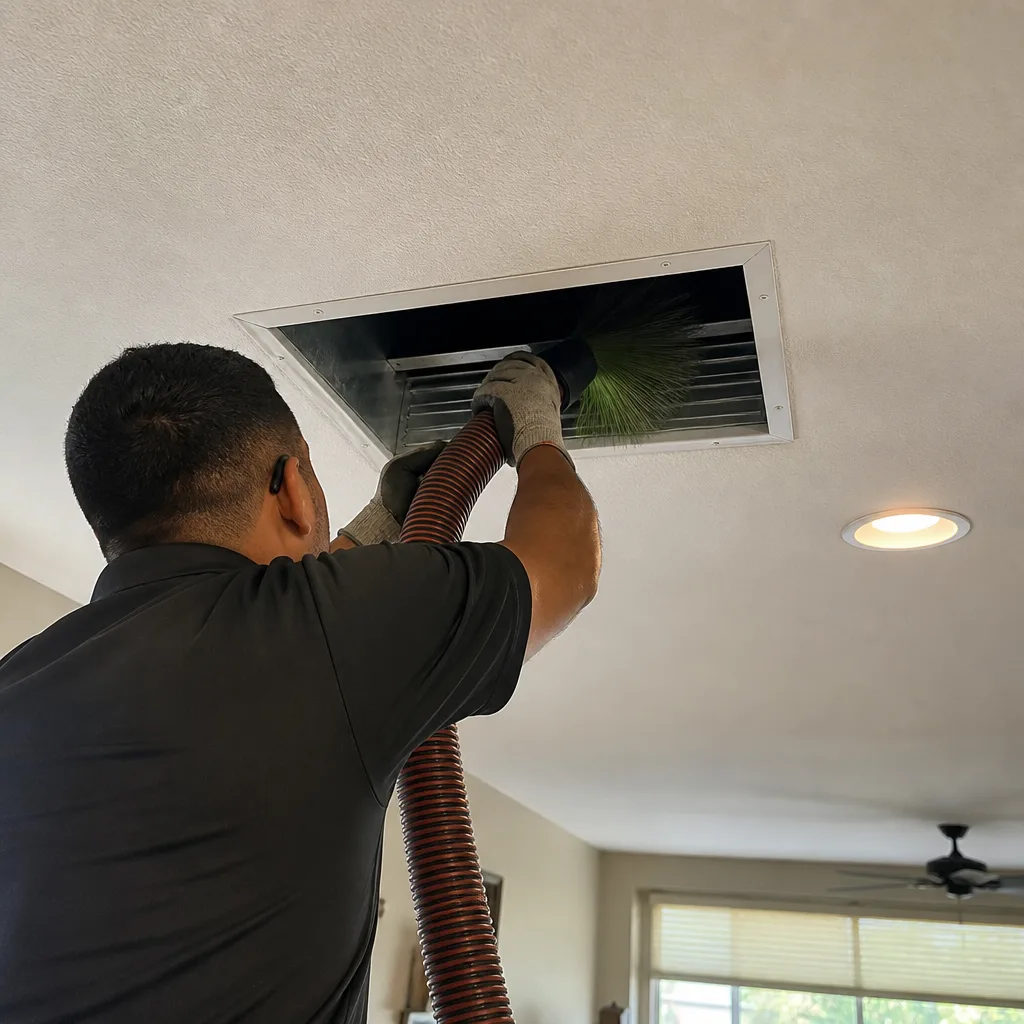 After
After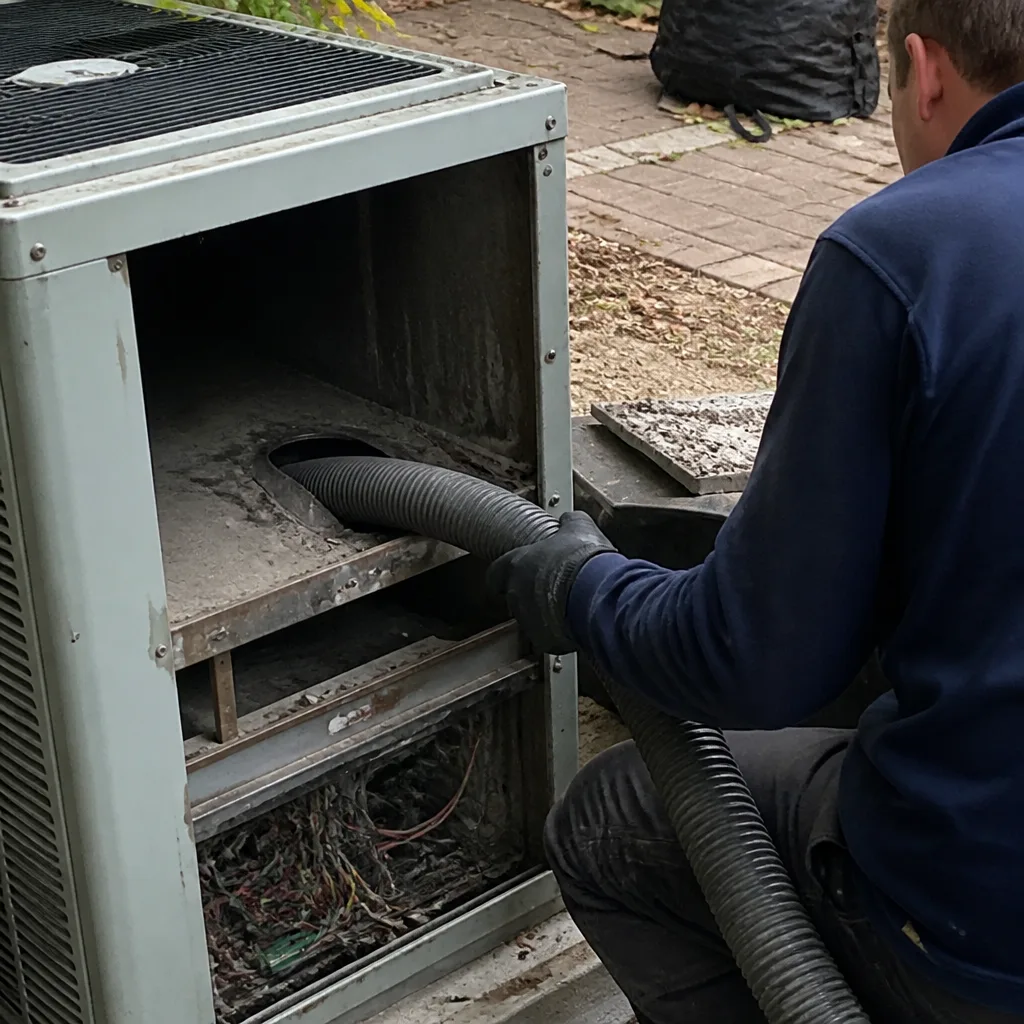 Before
 After
AfterAir Duct Cleaning Permits, Codes & Inspections in AZ: What You Need to Know
Here’s the distinction most Chandler homeowners miss: routine air duct cleaning requires no permit in Arizona, but the duct repair, sealing, and modification work that often happens during the same visit does - and the line between them is sharper than most technicians admit. In 2023, a Chandler home sale in the Cooper Commons neighborhood fell out of escrow when a buyer’s inspector flagged unpermitted plenum modifications performed during what the seller believed was a standard “cleaning” visit. We’ve seen this confusion cost sellers time, money, and leverage at the closing table. This guide draws the legal line between cleaning and construction, explains what Maricopa County actually enforces, and shows you how to protect your home’s paper trail - or explore our The Complete Guide to Air Duct Cleaning in Chandler for deeper context.
Quick Answer
Air duct cleaning itself - the removal of debris from existing ductwork using negative-pressure extraction or rotary brush systems - does not require a permit anywhere in Arizona. However, mechanical work that modifies, extends, or repairs the air distribution system, including plenum sealing, flex duct replacement, or access panel installation, triggers permit requirements under Maricopa County’s mechanical code when it exceeds maintenance-level scope. Homeowners should request written documentation distinguishing cleaning from repair work, and any repair should either carry a permit number or fall within an explicit maintenance exemption.
Table of Contents
- What Arizona Law Actually Says About Duct Work
- Maricopa County Permit Thresholds: Where the Line Sits
- Cleaning vs. Repair: The Critical Distinction
- How Unpermitted Duct Work Surfaces During a Home Sale
- What Legitimate Contractors Provide in Writing
- EPA Guidance vs. Arizona’s Enforceable Code
- Chandler-Specific Climate and Code Considerations
- How to Protect Your Home’s Paper Trail
 Before
 After
AfterWhat Arizona Law Actually Says About Duct Work
Arizona’s regulatory framework for HVAC systems sits primarily in the Arizona Administrative Code, Title 18, Chapter 5, which governs the Arizona Registrar of Contractors (ROC), and in the adopted mechanical codes that counties and municipalities enforce locally. The state does not regulate air duct cleaning as a standalone trade. No ROC classification exists specifically for “duct cleaning,” which means technicians performing cleaning-only work operate outside the state’s contractor licensing structure for that scope.
Where the law becomes specific is in mechanical work affecting the air distribution system. Arizona Administrative Code R18-5-302 defines contracting to include “installing, altering, or repairing” mechanical systems. The adopted International Mechanical Code (IMC), which Maricopa County enforces through its Supplementary Regulations, classifies ductwork as part of the mechanical system. This matters because “cleaning” and “repairing” occupy different positions in the regulatory hierarchy.
The IMC’s definition of repair versus replacement becomes relevant here. Section 202 defines repair as “the reconstruction or renewal of any part of an existing building for the purpose of its maintenance.” Maintenance-level repair, performed with listed materials and without altering the system’s design capacity, typically falls under maintenance exemptions in local jurisdictions. But replacement of duct sections, modification of plenum connections, or changes to register locations crosses into alteration territory.
We’ve encountered this boundary repeatedly in Chandler homes built during the 2004-2008 construction surge. Those properties often have original flex duct in attic spaces that has degraded from heat cycling. A technician cleaning that system may discover disconnected runs or collapsed sections. The decision to reattach versus replace becomes a permit question, not merely a service question. Arizona law does not leave this ambiguous: work that “alters” the system requires either a licensed contractor and permit, or a documented maintenance exemption.
Key provisions homeowners should understand:
- R18-5-301: Requires ROC licensing for work exceeding $1,000 or requiring a building permit - whichever threshold applies first
- IMC Section 202 definitions: Distinguish repair (maintenance) from alteration (modification of design or capacity)
- Maricopa County Supplementary Regulations Section 105.2: Exempts “ordinary repairs” from permit requirements, with specific limitations on mechanical work
- A.R.S. § 32-1151: Defines contracting without proper licensing as a class 1 misdemeanor, with escalating penalties for repeat violations
The practical takeaway: a technician who only cleans your ducts needs no license under ROC rules for that scope. A technician who repairs, replaces, or modifies your duct system while cleaning it does - and the permit follows the repair, not the cleaning.
Maricopa County Permit Thresholds: Where the Line Sits
Maricopa County’s Development Services Department processes mechanical permits through a framework that distinguishes maintenance from modification. Understanding this framework prevents homeowners from unknowingly accumulating unpermitted work.
The county’s permit exemption for mechanical work appears in the Maricopa County Supplementary Regulations, which modify the adopted IMC for local conditions. Ordinary repairs are exempt, but the exemption explicitly excludes “replacement of equipment, ductwork, or appliances” and “work that changes the design, capacity, or routing of the system.” This language is where most permit questions land.
Consider three scenarios we’ve documented in Chandler service records:
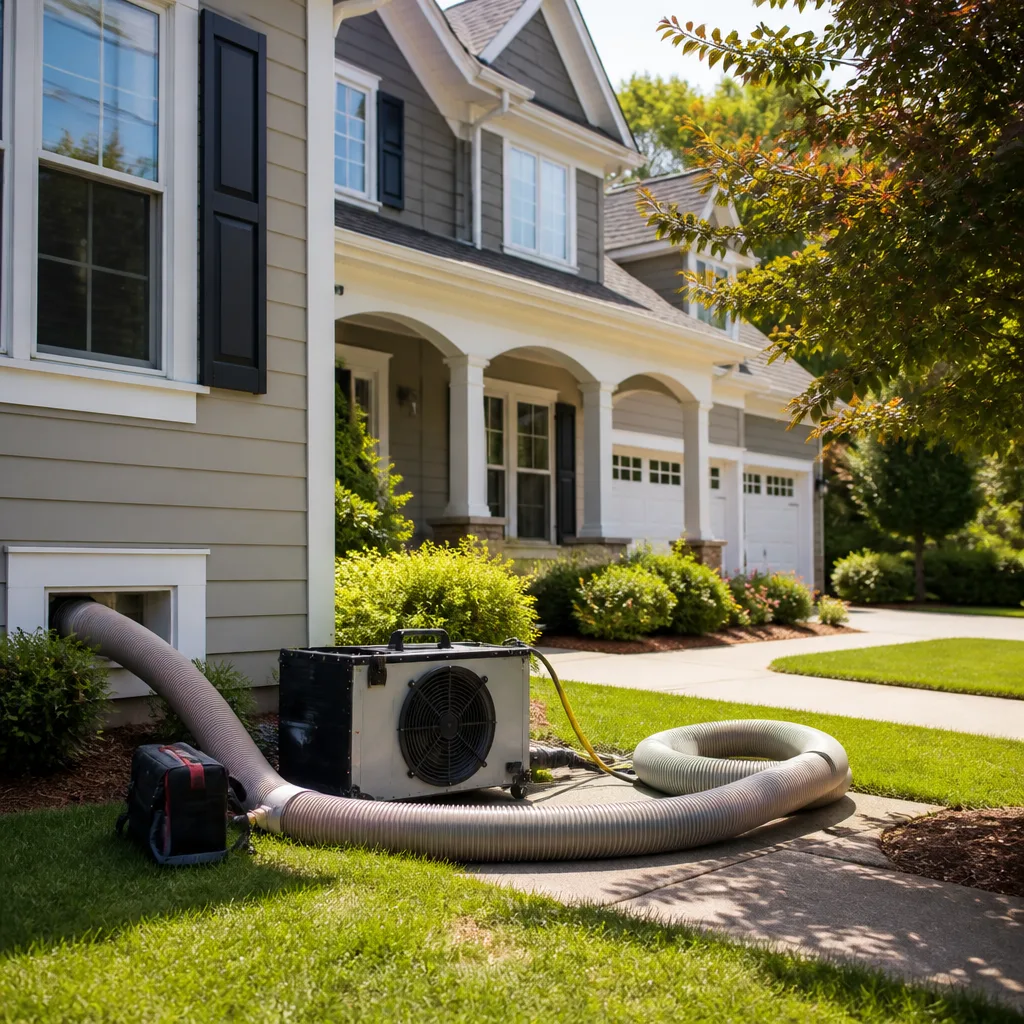
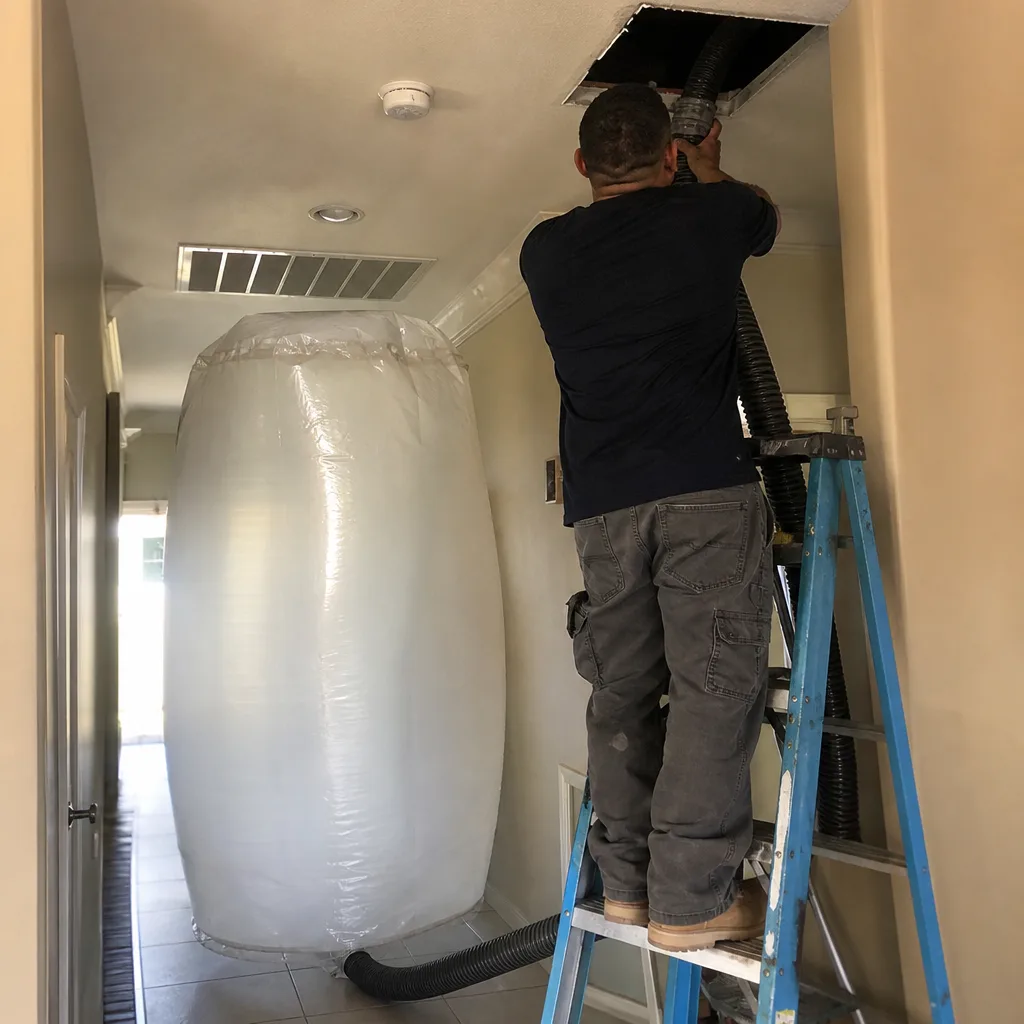
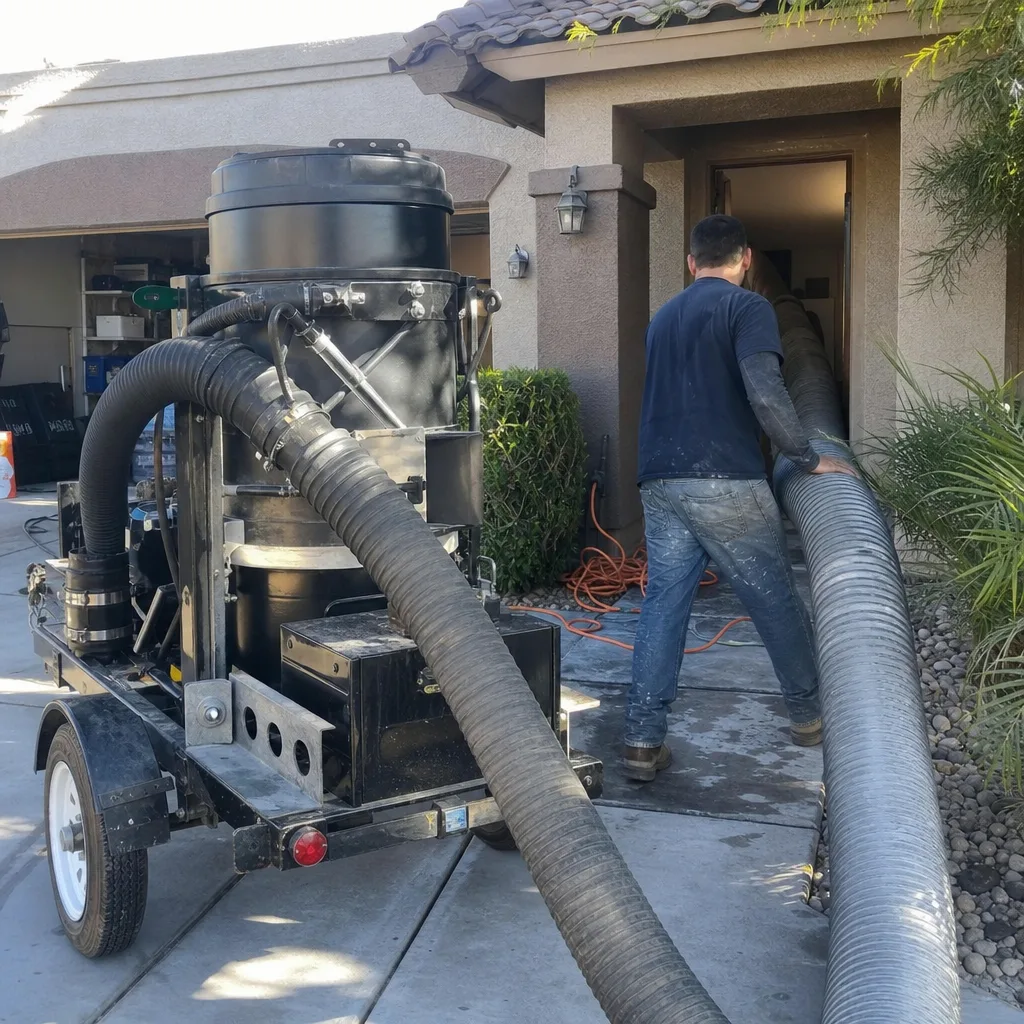
- Scenario A - Cleaning only: A Rotobrush system and negative-pressure extraction unit (we use Abatement Technologies portable HEPA collectors on Chandler jobs) remove debris from existing metal and flex duct. No disconnection of runs, no material replacement, no sealant application beyond temporary vacuum port sealing. Permit status: Not required. This is maintenance.
- Scenario B - Cleaning with minor repair: During cleaning, the technician finds a disconnected flex duct at a plenum collar. The run is reattached using the existing clamp or tie, with no replacement of material. Permit status: Gray area, but generally falls under maintenance exemption if the reconnection restores original configuration without new materials.
- Scenario C - Cleaning with modification: The technician replaces a collapsed flex duct run, installs a new access panel for future service, or applies mastic sealant to a plenum breach that changes air distribution patterns. Permit status: Permit required. This is alteration, not maintenance.
The county’s permit fee schedule for residential mechanical work in 2024 starts at approximately $175 for simple alterations, with plan review requirements for changes affecting system capacity. More significant is the inspection requirement: permitted mechanical work receives a rough inspection and final inspection, with documentation that attaches to the property’s permanent record.
Chandler homeowners in particular should note that Chandler’s municipal code adopts Maricopa County’s standards by reference but maintains its own inspection jurisdiction within city limits. A permit pulled through Maricopa County covers unincorporated areas; work within Chandler city limits requires permitting through Chandler’s Building Safety Division. We’ve serviced homes in both jurisdictions - from the county islands near Riggs Road to established Chandler neighborhoods like Fulton Ranch and Ocotillo - and the permitting authority follows the property’s location, not the contractor’s preference.
Homeowners can verify permit status through the Maricopa County Development Services portal or Chandler’s Building Safety online system. Any contractor performing permitted work should provide the permit number before work begins, per Haven Standard Clause 1: Written Price Before Any Work Starts, which we extend to include permit disclosure when applicable.
Cleaning vs. Repair: The Critical Distinction
The industry’s marketing language deliberately blurs this line. “Complete duct restoration,” “system rejuvenation,” “full-service duct renewal” - these phrases describe activities that may include both cleaning and repair without distinguishing which requires permitting. Homeowners need a clearer vocabulary.
Cleaning, in its pure form, is the removal of contaminants from existing surfaces. In ductwork, this means:
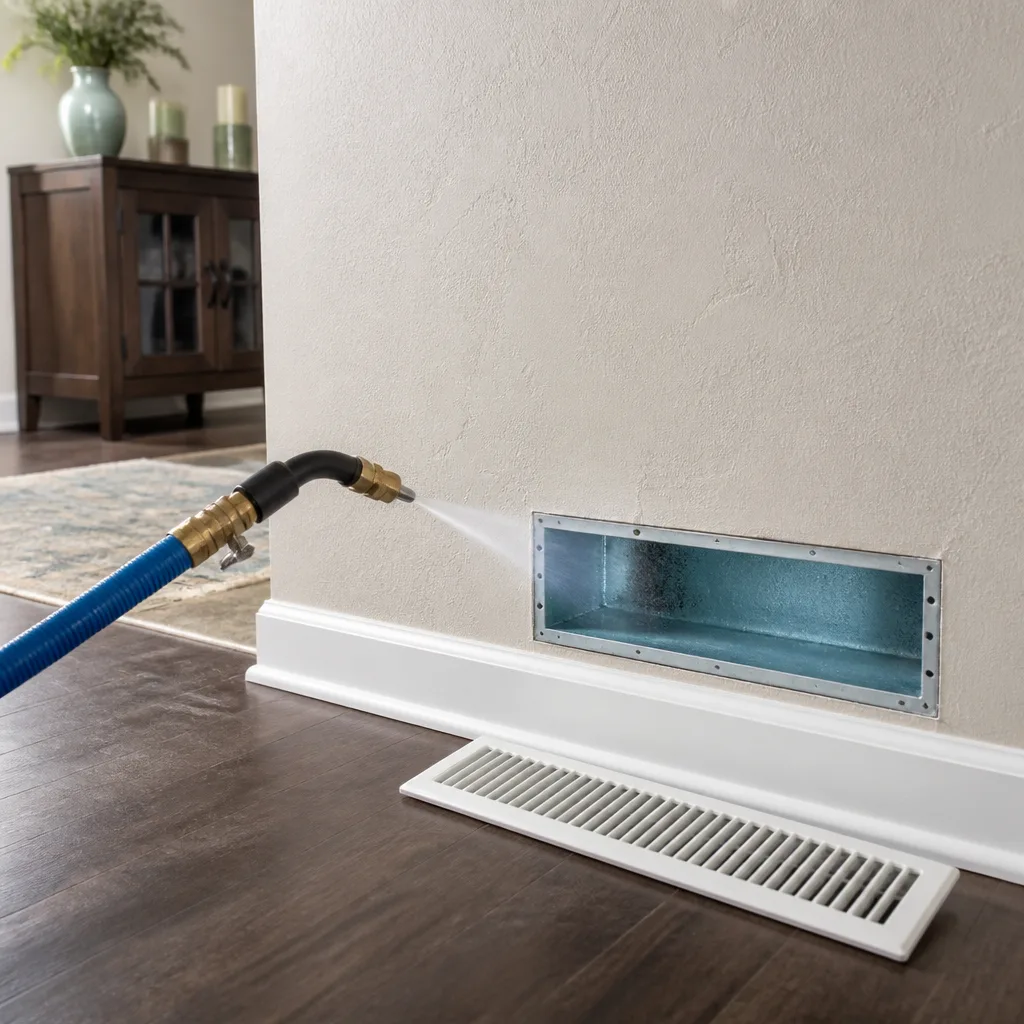
- Mechanical agitation using rotary brushes or compressed air whips to dislodge debris
- Negative-pressure extraction to capture dislodged material before it re-enters occupied space
- Contact vacuuming of registers and boots (the duct termination where air enters the room)
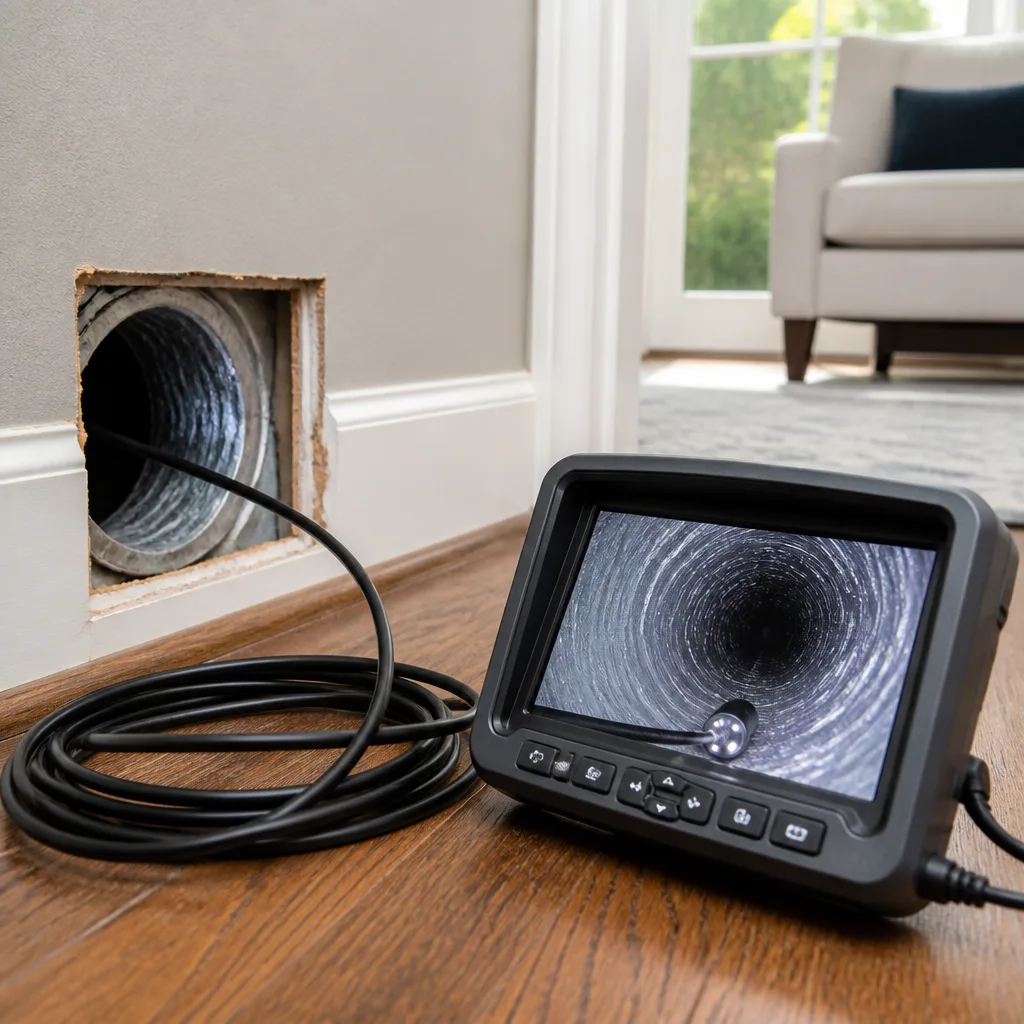
- Visual inspection using camera systems to document condition
Repair and modification, by contrast, change the physical system:
- Replacement of duct sections, whether flex, fiberglass, or metal
- Sealing of plenum breaches, disconnected collars, or deteriorated joints using mastic, tape, or aerosol sealant
- Installation of access panels, dampers, or balancing devices
- Rerouting of duct runs to improve distribution
- Application of internal coatings or sealants marketed as “duct lining” or “restoration”
The critical distinction for permit purposes is not what the service is called but what physically occurs. A “duct restoration” package that includes cleaning and sealing is two activities with different regulatory treatments. The cleaning requires no permit. The sealing, if it constitutes repair of the air distribution system, may.
In our Chandler work, we document this distinction in writing before any panel comes off. Our standard job record separates “Cleaning Scope” from “Repair Scope,” with permit status noted for any repair item. This practice emerged from a 2019 job in the Andersen Springs neighborhood, where a homeowner’s previous “cleaning” had included unpermitted flex duct replacement that we discovered during our own camera inspection. The work was functional but undocumented, creating a disclosure issue when the owner prepared to sell.
Technicians have economic incentive to expand scope. Cleaning-only visits have lower revenue potential than jobs that include repair. The homeowner’s protection is a written scope that specifies exactly what will be done, with permit requirements identified before work begins. Haven Standard Clause 1 requires this documentation; contractors who operate without it place the permit burden on the homeowner without their knowledge.
How Unpermitted Duct Work Surfaces During a Home Sale
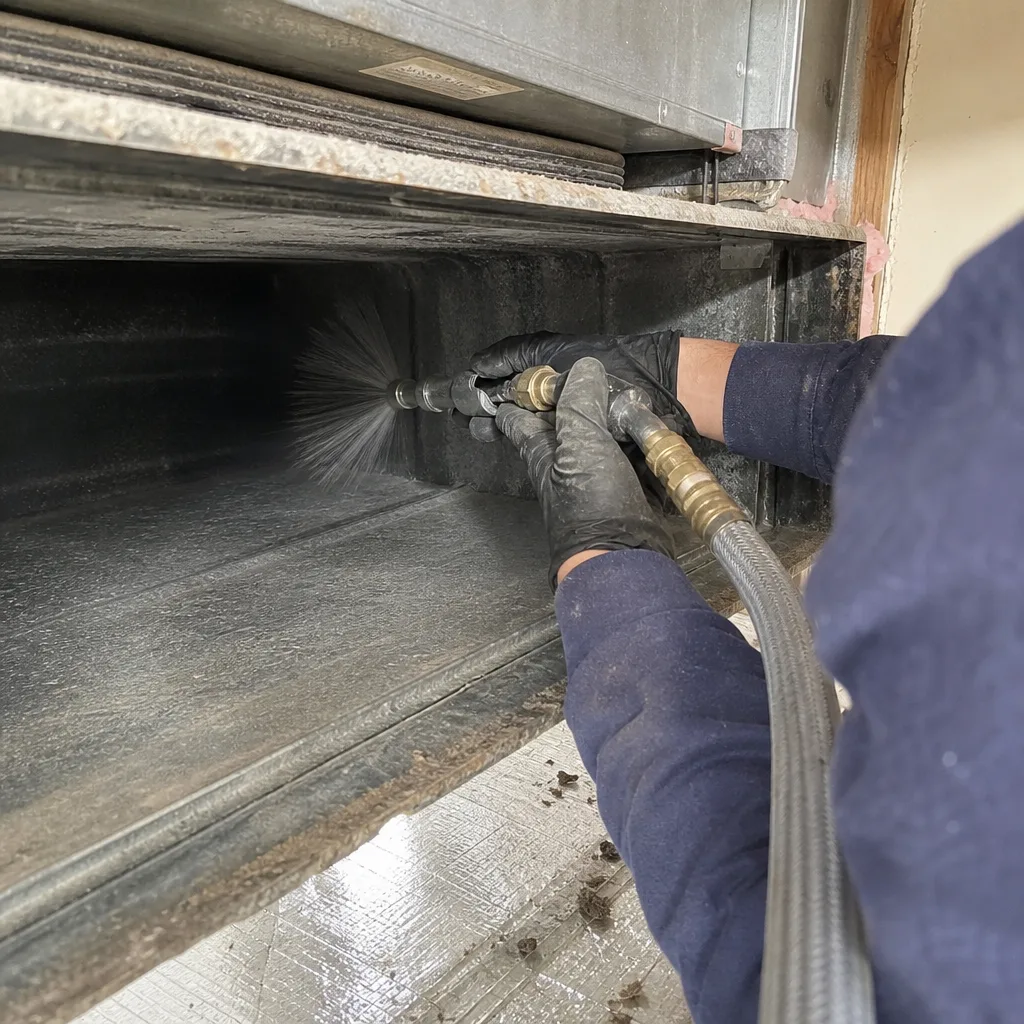
This is where the abstract permit question becomes concrete financial exposure. Arizona’s residential property disclosure form (required under A.R.S. § 32-2156) asks sellers to disclose “any remodeling, additions, or structural modifications made without required permits.” Ductwork modifications fall within this category when they constitute mechanical alterations.
The disclosure obligation is not theoretical. In Chandler’s active resale market, where homes in neighborhoods like Markwood North and Clemente Ranch turn over frequently, buyer inspectors increasingly examine accessible ductwork in attics and crawl spaces. Thermal imaging during inspections can reveal duct routing changes. The presence of new flex duct with manufacture dates post-dating home construction, or access panels that don’t match original construction, triggers questions about permitting.
When unpermitted work surfaces, the consequences follow predictable patterns:
- Buyer demand for retroactive permitting: The seller must apply for a permit after the fact, which requires opening walls or ceilings for inspector access, paying permit fees with penalties, and potentially modifying work to meet current code.
- Price renegotiation: Buyers commonly demand credits equal to estimated permitting costs plus contingency, often $2,000-$5,000 for mechanical work.
- Transaction delay: Retroactive permitting in Maricopa County typically requires 2-4 weeks for plan review and inspection scheduling, jeopardizing rate locks and moving timelines.
- Insurance complications: Some carriers question coverage for unpermitted modifications, particularly if water damage or fire loss traces to ductwork conditions.
The 2023 Cooper Commons case we referenced involved a seller who had paid $340 for what was marketed as a “complete duct cleaning and refresh.” The work included replacement of two flex duct runs and application of an internal sealant coating. No permit was pulled. The buyer’s inspector flagged the new duct material during attic inspection. The seller faced a $3,200 retroactive permit process that delayed closing by 19 days and cost the rate lock.
Chandler’s building safety records show increasing mechanical permit activity related to resale transactions, suggesting this issue is becoming more visible in the market. The protection is simple: any duct work beyond cleaning should either carry a permit number or a written maintenance exemption from the contractor, retained with your home records.
What Legitimate Contractors Provide in Writing
The documentation standard separates accountable contractors from operators who treat permits as the homeowner’s problem. When repair work accompanies cleaning, you should receive four specific documents before work begins:
- Written scope of work separating cleaning from repair: Each activity listed independently, with materials specified. “Clean supply and return ductwork using negative-pressure extraction” distinct from “Replace 12-foot flex duct run from plenum to register R-3 using R-6 insulated flex, secure with UV-rated ties.”
- Written price for each scope element: Haven Standard Clause 1 requires this as standard practice. The price for cleaning and the price for repair should be separately stated, not bundled into a single figure that obscures the repair component.
- Permit status disclosure: Explicit statement whether a permit is required, has been obtained, or is exempt as maintenance. If exempt, the specific regulatory basis for the exemption. If permitted, the permit number and jurisdiction.
- Post-work documentation: For cleaning, this includes the Documented Photo Record showing interior duct condition before and after. For repair, this includes permit inspection sign-off or, for exempt maintenance, photographic documentation of the repair and a statement confirming it falls within maintenance exemption criteria.
We’ve delivered this documentation package on every Chandler job since 2013. The photo record in particular has proven its value beyond marketing - homeowners use these images during resale to demonstrate system condition, and the timestamped before/after sequence provides evidence of work scope if questions arise later.
Contractors who resist written documentation, who bundle cleaning and repair into vague “packages,” or who claim permits are “the homeowner’s responsibility” after performing repair work, are creating the conditions for future liability. The ROC complaint history in Arizona shows hundreds of cases where mechanical work performed without proper licensing or permitting became the homeowner’s problem at sale time.
Our equipment roster - Rotobrush for mechanical agitation, Nikro and Abatement Technologies for negative-pressure collection, Guardsman for access panel installation when repair scope requires it - is specified in our written scope so customers can verify what will be used before agreeing to a price. This transparency is not marketing decoration; it’s the documentation that protects both parties if questions arise later.
EPA Guidance vs. Arizona’s Enforceable Code
Much of what homeowners read about duct cleaning originates with the U.S. Environmental Protection Agency, which published guidance in 1997 and updated it periodically. This guidance is frequently mischaracterized as regulatory. It is not.
The EPA’s position on duct cleaning is advisory. The agency states that “knowledge about air duct cleaning is in its early stages” and that “duct cleaning has never been shown to actually prevent health problems.” The EPA does not certify duct cleaning companies, does not set standards for the practice, and does not inspect or enforce duct cleaning activities. Its guidance document (EPA 402-K-97-002) explicitly notes that “no EPA recommendations exist at this time either for or against duct cleaning.”
Arizona’s enforceable code operates in a different category entirely. The Arizona Administrative Code, Maricopa County Supplementary Regulations, and municipal codes adopted by Chandler and other jurisdictions create actual legal obligations with penalties for non-compliance. These codes do not regulate duct cleaning specifically, but they regulate mechanical work that affects duct systems, and they enforce contractor licensing requirements that apply to repair and modification work.
The confusion between EPA guidance and state code matters because some contractors cite EPA documents as evidence that duct cleaning is “unregulated” - implying that all associated activities, including repair, operate in a permissive gray zone. This is incorrect. The absence of EPA regulation does not mean absence of state or local regulation. Arizona’s ROC and county building departments enforce their codes regardless of EPA’s advisory stance.
Homeowners researching this topic should understand what each source actually controls:
| Source | What It Actually Is | What It Controls | Enforcement Mechanism |
|---|---|---|---|
| EPA duct cleaning guidance | Advisory document | Nothing; recommendations only | None |
| Arizona Administrative Code Title 18 | State law | Contractor licensing, ROC enforcement | Criminal penalties, license revocation |
| International Mechanical Code (adopted) | Model code, locally enforced | Mechanical system design, installation, alteration | Permit denial, stop-work orders, red tags |
| Maricopa County Supplementary Regulations | County amendments to IMC | Local permit thresholds, exemptions | County inspection failure, certificate of occupancy hold |
| Chandler Municipal Code | City ordinance | Work within city limits | City enforcement, fines |
The practical implication: when a contractor tells you something is “EPA approved” or “not regulated by the EPA,” that statement is irrelevant to whether the work requires a permit under Arizona law. The only relevant question is whether the activity constitutes mechanical work under the adopted code, and whether that work exceeds maintenance exemption thresholds.
Chandler-Specific Climate and Code Considerations
Chandler’s desert climate creates conditions that accelerate duct degradation and complicate the cleaning-versus-repair calculation. Attic temperatures in Chandler regularly exceed 140°F during summer months, accelerating flex duct insulation breakdown and adhesive failure at plenum connections. The monsoon season’s humidity spikes, brief but intense, introduce moisture into attic spaces that can degrade duct board and promote biological growth in debris-laden systems.
These conditions mean that “cleaning” visits in Chandler more frequently discover repair needs than in milder climates. A system that would present as merely dirty in Portland may present as dirty and deteriorated in Chandler. The technician’s incentive to expand scope is stronger here, and the homeowner’s need for clear documentation is correspondingly greater.
Chandler’s building stock also affects the permit landscape. Homes built 2004-2008, common in neighborhoods like Cooper Commons, Ocotillo, and Fulton Ranch, often have original flex duct with a 15-20 year service life in attic conditions. These properties are now entering the zone where cleaning visits routinely encounter material failure. Homes built 2015-2025, particularly in newer developments like Chandler Heights and the Price Corridor area, may have better initial ductwork but are accumulating construction debris and occupant-generated contaminants that drive cleaning demand.
The city’s adoption of Maricopa County’s energy code amendments also matters. Chandler requires duct sealing and testing for new construction and major renovations, with specific leakage rate requirements. Repair work that affects system airtightness may trigger energy code compliance verification, adding another layer to the permit question. A technician who seals ductwork during a cleaning visit without understanding these requirements may create compliance issues that surface during future permitted work or home sale inspection.
We’ve documented this pattern in our Chandler service records: homes with previous “cleaning” that included unsealed mastic application or improper tape selection, creating adhesion failures within two to three years of the original work. The repair was performed without permit, without inspection, and without documentation of materials used. When the homeowner later sought permitted HVAC upgrades, the inspector flagged the prior duct sealing as requiring correction before the new permit could be finalized.
How to Protect Your Home’s Paper Trail
Documentation is the homeowner’s only protection against future permit and disclosure problems. The following practices, developed from our experience with Chandler homes and Maricopa County’s regulatory environment, create a defensible record. You can also find more guides & resources on our blog:
- Request written scope before any work begins: Not an estimate, not a proposal - a specific scope that lists each activity, each material, and each piece of equipment. If the contractor cannot produce this, the work should not proceed.
- Require permit disclosure in writing: The scope should state explicitly whether a permit is required, has been obtained, or is exempt. If exempt, the contractor should cite the specific regulatory provision. Vague statements like “this doesn’t need a permit” are insufficient.
- Separate cleaning and repair pricing: Even if performed during the same visit, these are different activities with different regulatory treatments. Bundled pricing obscures the repair component and its permit status.
- Retain all documentation with your home records: Scope, invoice, permit documents (if applicable), and photo documentation should be filed with your property records, not discarded after the work is complete. These documents have 7-10 year relevance for disclosure and resale purposes.
- Verify contractor credentials independently: ROC license status can be verified at roc.az.gov. Ask for the license number and check it. CleanRun publishes our license number on every page; contractors who hesitate to provide this information should be declined.
- Photograph accessible work areas before and after: Even if the contractor provides photo documentation, your own images of attic and crawl space conditions create an independent record. Date-stamped smartphone photos are sufficient.
For Chandler homeowners specifically, we recommend also checking the Chandler Building Safety permit lookup before any repair work begins, to confirm whether a permit has been pulled if the contractor claims one is required. The city’s online system allows permit status verification by address.
Common Mistakes to Avoid
- Assuming “cleaning” covers everything the technician does: In Chandler’s heat-stressed duct systems, technicians regularly encounter repair needs. Without written scope separation, you may pay for unpermitted repair without knowing it.
- Accepting verbal permit assurances: “Don’t worry about it” or “we’ve done hundreds without permits” are statements that protect the contractor, not you. Permit status belongs in writing on the scope document.
- Discarding documentation after payment: The invoice from a 2019 cleaning visit becomes relevant when you sell in 2027. Retain records for the full period of home ownership plus any applicable statute of limitations.
- Hiring based on lowest price without scope comparison: A $199 “whole house special” that includes undisclosed repair work creates more liability than a $400 cleaning-only price with transparent documentation.
- Failing to verify ROC license for repair work: Cleaning-only work requires no ROC license, but repair work does. If your technician performs repair, they need proper licensing or they are operating illegally.
- Ignoring permit requirements for “minor” modifications: Even access panel installation, if it affects system airflow or integrity, may trigger permit requirements under Maricopa County’s mechanical code.
- Confusing EPA guidance with legal exemption: The EPA’s advisory stance on duct cleaning provides no protection against local code enforcement for unpermitted mechanical work.
When to Call a Professional
Call a licensed, documented contractor - or contact us for our Air Duct Cleaning services - when your duct system needs attention beyond debris removal: disconnected runs, visible damage, airflow imbalance between rooms, or post-renovation contamination. In Chandler’s climate, material degradation accelerates, and early professional assessment prevents the minor repair from becoming major replacement.
CleanRun Air Duct Cleaning Chandler offers free estimates in Chandler - call (520) 464-6297. Every estimate includes written scope separation of cleaning and repair activities, permit status disclosure, and our Documented Photo Record delivered as a standard job deliverable. We do not perform repair work without explicit written authorization and proper permitting when required.
Frequently Asked Questions
No. Routine air duct cleaning - the removal of debris from existing ductwork using mechanical agitation and negative-pressure extraction - does not require a permit in Chandler or anywhere in Arizona. However, if the technician performs repair, replacement, or modification of duct materials during the same visit, that work may require permitting under Maricopa County’s mechanical code.
Whole-system air duct cleaning in Chandler typically ranges from $400 to $800 for a standard single-system home, depending on system accessibility, duct material type, and contamination level. This is cleaning-only pricing; repair work is priced separately with written scope. We do not quote per-vent pricing, which industry-wide functions as a bait-and-switch mechanism. Call (520) 464-6297 for a written estimate with exact scope - estimates are free.
Low quotes typically reflect one of three conditions: scope limitation (only visible register cleaning, not full duct runs), equipment deficiency (shop-vacuum level extraction rather than negative-pressure systems), or undisclosed repair pricing that surfaces after work begins. The $79-$149 coupon price universally requires upsold repair or “additional vent” charges to reach viable revenue. Our written price before work starts, under Haven Standard Clause 1, eliminates this ambiguity.
Request a Documented Photo Record showing the interior of every duct run before and after work. Timestamped, location-identified images are the only verifiable evidence of work scope. We deliver this as a standard job record on every visit, a practice held since our first job in 2013. Without photographic documentation, you have only the technician’s word.
For most Chandler homes, every 3 to 5 years with normal occupancy and no contributing factors. Homes with pets, recent renovation, or occupants with respiratory sensitivity may benefit from more frequent service. The desert climate’s dust load and monsoon humidity patterns create conditions that accelerate debris accumulation compared to less arid regions. Visual inspection through register access, or professional camera inspection, provides objective evidence of need.
The seller typically faces three options: obtain retroactive permitting (opening work for inspection, paying fees with penalties), negotiate a price credit to the buyer for estimated permitting costs, or remove the work and restore original configuration. All three options cost substantially more than proper permitting would have cost originally. Written documentation from the original contractor, including permit status disclosure, prevents this scenario.
Yes, when repair work exceeds maintenance exemption thresholds under Maricopa County or Chandler code. We disclose permit requirements in writing before work begins, include permit costs in our written pricing, and provide permit documentation as part of the job record. Repair work performed under maintenance exemption is documented with photographic evidence and regulatory citation. Haven Standard Clause 1 requires this transparency.
The Bottom Line
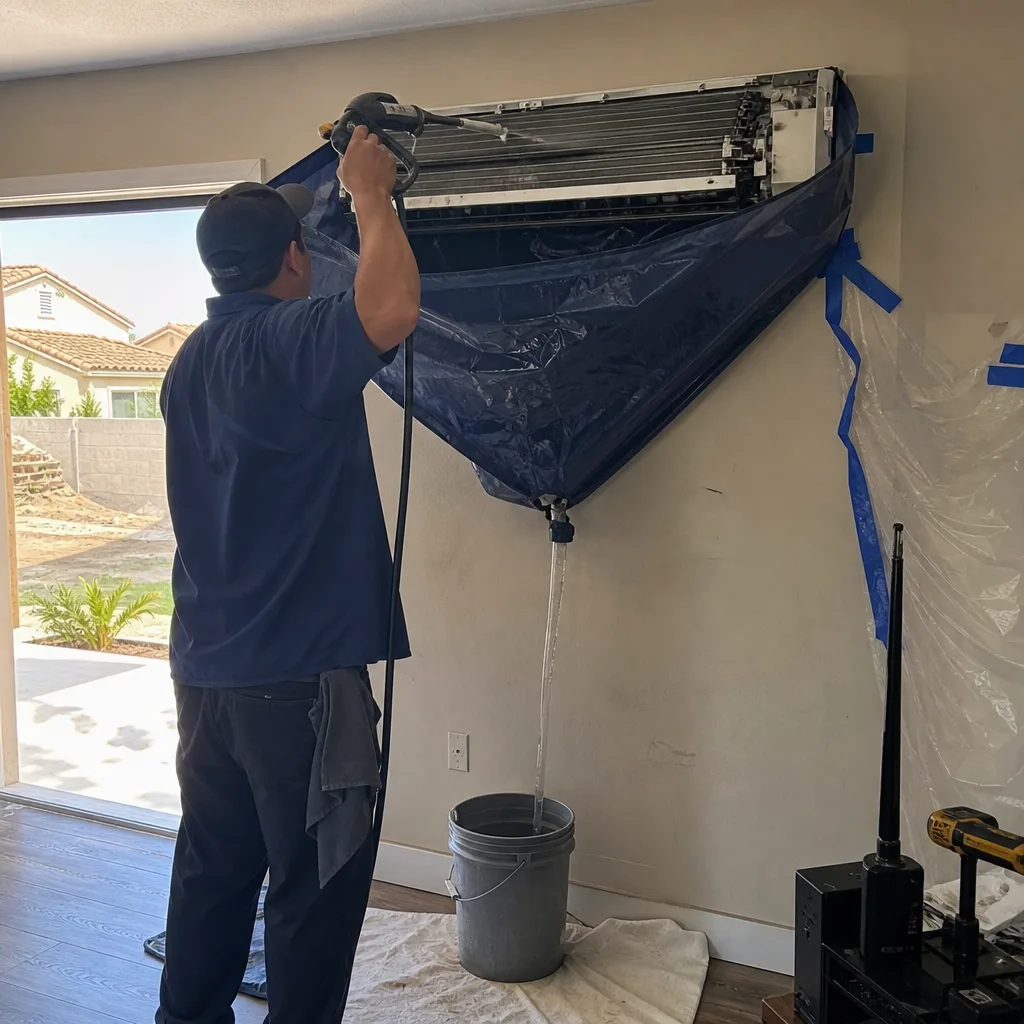
Air duct cleaning in Arizona operates in a regulatory gap that benefits informed homeowners and exposes uninformed ones. The cleaning itself requires no permit, but the repair work that often accompanies it does - and the line between them is defined by what physically happens to your system, not what the service is called. In Chandler’s heat-stressed housing stock, that line is crossed more frequently than in milder climates. Protect yourself with written scope separation, explicit permit disclosure, and retained documentation. The cost of clarity before work begins is negligible compared to the cost of retroactive permitting during a home sale.
Written by Tomas Reyes, Owner at CleanRun Air Duct Cleaning Chandler, serving Chandler since 2013.